
Quick Answer
What Are Stress Busters and Do They Actually Work?
Stress busters are science-backed techniques, habits and tools that interrupt the stress response and restore calm — from immediate relief methods like deep breathing and cold water resets to long-term strategies like exercise, sleep and boundary-setting. Yes, they work — when applied consistently. The key is matching the right technique to the type of stress you are experiencing: acute stress (short-term, situational) responds to breathing and grounding techniques in under 5 minutes. Chronic stress requires structural changes to sleep, workload and environment. This guide covers all 25 evidence-backed techniques, with specific guidance for Australia, UK, Canada and New Zealand.
Stress is a natural part of life. But when it becomes constant, overwhelming, or unmanageable, it starts affecting your sleep, focus, mood, productivity, and even your physical health.
If you’re searching for real, practical ways to reduce stress naturally, this guide brings together science-backed stress relief techniques that work in everyday life. Whether you’re dealing with workplace pressure, academic stress, relationship challenges, or emotional overwhelm, these proven stress busters can help you regain control and restore balance.
One of the biggest hidden causes of stress is worrying about things you can’t control.
✨ No Sponsorships. No Fluff.
The Free Self-Care Apps Actually Worth Keeping on Your Phone
See the Free List →What Stress Actually Does to Your Body and Brain
Before learning how to reduce stress, it’s important to understand what happens inside your body.
When you experience stress, your brain activates the fight-or-flight response. This releases hormones like:
Cortisol
Adrenaline
Noradrenaline
In short bursts, this response helps you react quickly. But when stress becomes chronic, elevated cortisol levels can lead to:
Poor sleep
Weakened immunity
Digestive problems
Irritability and mood swings
Brain fog and lack of focus
That’s why stress management is not just about “feeling calm.” It’s about protecting your long-term health.
Now let’s move to solutions.
Types of Stress: Acute, Chronic, and Workplace Stress
Not all stress is the same. Understanding the type of stress you are experiencing helps you manage it more effectively.
Acute Stress
Acute stress is short-term and situation-based. It happens during:
Tight deadlines
Public speaking
Exams
Unexpected conflicts
This type of stress can actually improve performance in small doses. It increases alertness and reaction time. However, frequent acute stress without recovery periods can accumulate and lead to exhaustion.
Chronic Stress
Chronic stress is long-term and persistent. It often stems from:
Financial pressure
Relationship problems
Job insecurity
Ongoing health concerns
Unlike acute stress, chronic stress keeps cortisol levels elevated for extended periods. Over time, this may contribute to:
High blood pressure
Weakened immune system
Digestive problems
Anxiety and depression symptoms
Sleep disruption
Chronic stress requires structural lifestyle adjustments, not just quick calming techniques.
✨ The Complete Glow Up Guide
Skin, hair, and the habits behind both. Start with whichever part of your glow up matters most to you.
Workplace Stress
Workplace stress has become one of the most common stressors in Tier 1 countries. Contributing factors include:
Performance pressure
Long working hours
Lack of work-life balance
Toxic work environments
Micromanagement
Understanding your stress category allows you to apply the right strategy instead of temporary relief. When stress tips into full overwhelm and your brain shuts down completely, these strategies need a different approach — our guide on what to do when you feel overwhelmed gives you a step-by-step reset for those moments.”
Free Tools
Discover your biorhythm — free, instant, no sign-up
What Are the Hidden Causes of Stress?
Most people can identify the obvious stressors in their life — a difficult job, financial pressure, relationship friction. But a significant portion of chronic stress comes from sources that are rarely named or examined. These hidden causes maintain your nervous system in a state of low-grade activation even when nothing is obviously wrong.Perfectionism and Impossibly High Standards
Perfectionism is one of the most common hidden stress drivers, particularly among high-achievers in the UK, Australia and Canada. When the internal bar is set at a level that cannot realistically be reached consistently, the nervous system experiences a persistent sense of failure and inadequacy — even when external performance is objectively excellent. Perfectionism-driven stress rarely resolves through harder work, because the standard moves with the achievement.Digital Overstimulation
Constant connectivity keeps the nervous system in a state of low-level alert. Every notification is a micro-stress event — a small demand for attention and assessment. Across a full day, this accumulates into significant cognitive load and elevated cortisol, even if no individual notification feels stressful. Research from the University of California Irvine found that after a digital interruption, it takes an average of 23 minutes to return to the original task. Most people experience dozens of such interruptions daily.Unprocessed Emotions
Emotions that are avoided or suppressed rather than processed do not disappear. They convert into a form of stored tension that maintains physiological stress activation. Anger that is not expressed, grief that is not acknowledged, and anxiety that is not examined all create persistent low-grade stress independent of current circumstances. This is why journaling, therapy and honest conversation reduce stress even when nothing in the external situation has changed.Poor Sleep Quality (Not Just Duration)
Most people know that not enough sleep causes stress. Fewer recognise that disrupted or low-quality sleep — even in sufficient quantity — maintains elevated cortisol levels the following day. Waking frequently, light sleep with little deep or REM sleep, and inconsistent sleep timing all create a hidden biological stressor that amplifies every other source of stress in your life.Stress also shows up in places people don’t expect, like dull skin and extra hair shedding. If that sounds familiar, our guides to a natural glow skincare routine and healthier hair from the inside out cover how to support both.
Lack of Autonomy and Control
One of the most consistent findings in stress research is that perceived control is more important than actual circumstances in determining stress levels. People in situations where they feel they have no agency — whether in work, relationships or finances — experience significantly higher stress than those facing objectively more difficult circumstances but with more control. Identifying even small areas where you can exercise genuine choice dramatically reduces perceived stress.Social Comparison and Status Anxiety
Social media has amplified a stress driver that has always existed — the continuous, often unconscious comparison of your circumstances to others’. This is not vanity; it is a deeply hardwired social monitoring system assessing your relative position in a group. The problem is that social media presents a curated highlight reel, making the comparison inherently distorted. Status anxiety — the feeling of falling behind, not being enough, or being left out — is one of the most underdiagnosed sources of chronic low-grade stress in connected societies.😄 Need a Happiness Boost?
Habits, quotes, and daily moments to help you feel a little lighter today.
🧠 If happiness feels out of reach lately, stress might be the real reason why.
Check My Stress Level →
The Science of Cortisol and Stress Hormones
When you experience stress, your body releases cortisol, often called the “stress hormone.” Cortisol is not harmful by itself. In fact, it plays an important role in helping you wake up in the morning, respond to challenges, and regulate blood pressure and blood sugar.
The problem arises when cortisol levels remain elevated for long periods due to chronic stress.
Consistently high cortisol may contribute to:
Persistent fatigue
Difficulty sleeping
Weight gain, especially around the abdomen
Increased cravings for sugar or salty foods
Brain fog and difficulty concentrating
Irritability or mood swings
Over time, chronic elevation of stress hormones can weaken immune function and increase inflammation in the body.
To help regulate cortisol naturally:
Maintain a consistent sleep schedule.
Engage in moderate exercise, not excessive overtraining.
Eat balanced meals with adequate protein and healthy fats.
Limit excessive caffeine consumption.
Practice relaxation techniques such as deep breathing or meditation.
Stress management is not just about feeling calm. It is about stabilizing the biological systems that protect long-term health.

Immediate Stress Relief Techniques (Calm Yourself in 5 Minutes)
These techniques work fast when you feel overwhelmed.
1. Practice Deep Breathing (4-7-8 Method)
Inhale for 4 seconds, hold for 7, exhale for 8.
This activates your parasympathetic nervous system and signals safety to your brain.
2. Try Box Breathing
Inhale 4 seconds → Hold 4 → Exhale 4 → Hold 4.
Used by athletes and military professionals to stabilize stress instantly.
3. Cold Water Reset
Splash cold water on your face or hold something cold.
This triggers the dive reflex and reduces anxiety.
4. Grounding Technique (5-4-3-2-1)
Identify:
5 things you see
4 you feel
3 you hear
2 you smell
1 you taste
It pulls your mind out of anxious loops.
5. Step Outside for Fresh Air
Even 5 minutes in nature lowers cortisol.
From calming anxiety to finding your angel number — everything here is free, practical, and written to actually help.
How to Stay Calm Under Pressure at Work
Many professionals search for ways to stay calm under pressure, especially in high-performance roles. Stress at work is often linked to deadlines, presentations, or decision-making responsibilities.
Here are practical techniques used by executives and high-performing professionals:
1. Controlled Breathing Before Meetings
Before entering a high-stakes meeting, take 60 seconds for deep nasal breathing. This reduces heart rate variability and improves clarity.
2. Cognitive Reframing
Instead of thinking:
“I can’t handle this.”
Shift to:
“This is challenging, but I’ve handled difficult situations before.”
Your brain responds differently to perceived challenge versus perceived threat.
3. Single-Task Focus
Multitasking increases stress hormones. Focus on one task at a time using time blocks of 25–45 minutes.
4. Micro-Recovery Breaks
Stand up, stretch, or step outside for 3–5 minutes every hour. Short recovery intervals prevent burnout.
If workplace conflict is contributing to stress, you may find practical strategies in our guide on dealing with difficult coworkers and setting boundaries effectively.
High performance is sustainable only when stress is regulated, not ignored. Solo weekend time is one of the most underrated stress recovery tools. If you’re not sure how to spend it well, our guide on fun things to do by yourself on a weekend gives you 35 practical ideas that actually feel good.
📱 5 Free App Guides for Your Mind & Mood
No paywalls, no trials that quietly start charging you — just genuinely free tools, hand-picked and reviewed.
🧠 Not sure how stressed you actually are? Find out in 3 minutes.
Check My Stress Level →Long-Term Stress Management Strategies
These habits prevent stress from building up.
6. Exercise Regularly
Physical activity releases endorphins, your body’s natural stress relievers.
Walking, yoga, strength training, or cycling all help.
7. Improve Sleep Quality
Aim for 7 to 9 hours.
Create a calming bedtime routine and reduce screen time before sleep. If your stress specifically spikes at night and stops you from sleeping, this dedicated guide on how to stop overthinking at night gives you 15 techniques designed specifically for that bedtime mental spiral.
8. Maintain a Balanced Diet
Magnesium, omega-3 fatty acids, and antioxidant-rich foods help regulate stress hormones.
9. Practice Journaling
Writing your thoughts reduces mental clutter and improves clarity.
10. Limit Digital Overload
Constant notifications keep your nervous system on high alert.
Schedule screen-free time daily.
11. Practice Meditation
Meditation strengthens emotional regulation and reduces anxiety.
Even 10 minutes daily makes a difference.
12. Laugh More
Laughter reduces cortisol and boosts mood instantly.
13. Build Supportive Relationships
Surround yourself with people who uplift you, not drain your energy. If you constantly feel drained around certain individuals, you may be dealing with toxic personalities. Read our detailed guide on how to identify and handle toxic people without losing your peace.
14. Set Healthy Boundaries
Learn to say no without guilt. Protecting your time protects your peace. Sometimes stress reduces dramatically when you choose distance over drama. These walking away quotes about strength and self-respect may inspire clarity.
15. Celebrate Small Wins
Acknowledging progress builds confidence and resilience.
Stress vs Burnout: Warning Signs You Should Not Ignore
Stress and burnout are related but not identical.
Stress
Stress often feels like:
Overwhelm
Urgency
Anxiety
Hyperactivity
You may still feel motivated, just overloaded.
Burnout
Burnout is deeper and more dangerous. It includes:
Emotional exhaustion
Cynicism or detachment
Reduced productivity
Loss of motivation
Feeling numb instead of anxious
Burnout is common in healthcare professionals, corporate employees, entrepreneurs, and caregivers.
If you notice persistent emotional exhaustion and loss of enthusiasm, it may be time to reassess workload, boundaries, and recovery strategies.
Preventing burnout requires:
Scheduled rest
Clear boundaries
Delegation
Realistic goal setting
Professional support when needed
Ignoring burnout can impact both mental and physical health long-term.
Low motivation and high stress often feed each other. Our guide on productive things to do with no motivation pairs well with these stress busting techniques for days when both are hitting at once.
Workplace Stress: How to Stay Calm Under Pressure
Workplace stress is one of the most common causes of chronic tension.
Common triggers include:
Unrealistic deadlines
Difficult colleagues
Poor work-life balance
Performance pressure
If you are struggling with difficult colleagues, read our guide on how to deal with toxic coworkers for practical boundary-setting strategies.
To manage work stress:
Break large tasks into smaller steps
Prioritize using the 80/20 rule
Schedule short reset breaks
Avoid multitasking overload
High performance does not require constant pressure. It requires structured focus. If your stress follows a weekly rhythm and peaks on Sunday evenings before the workweek, that specific pattern has its own name and solutions — read our guide on Sunday scaries and how to deal with them.
💙 Do you get Anxious easily? Read these helpful guides
Measure how stressed you really are — free PSS-10 assessment, 3 minutes, no sign-up.
🧠 Take the Stress Test →Stress and Productivity: How to Perform Without Burning Out
Many professionals believe stress is the price of success. While moderate pressure can sharpen focus, excessive stress reduces performance and decision-making quality.
The relationship between stress and performance follows what psychologists call the performance curve. At low levels, stress may increase alertness. At moderate levels, it enhances productivity. But beyond a certain point, performance drops sharply.
Signs that stress is harming productivity include:
Frequent mistakes
Reduced concentration
Emotional reactivity
Decision fatigue
Procrastination despite urgency
High performers manage stress strategically. They do not eliminate it; they regulate it.
Practical techniques include:
Time blocking important tasks into focused intervals.
Avoiding multitasking, which increases cognitive overload.
Taking structured micro-breaks every 60–90 minutes.
Ending the workday with a shutdown routine to prevent mental carryover into the evening.
Sustainable productivity requires recovery. Performance without recovery leads to burnout.
For moments when stress tips into acute anxiety rather than general tension, these techniques on how to calm anxiety fast are more targeted — specifically designed for the sudden spike rather than the slow build.
Stress in Students and Teenagers
Academic pressure, social comparison, and digital overload make stress common among students.
Warning signs include:
Irritability
Withdrawal
Sleep changes
Difficulty concentrating
For a deeper understanding of youth-related stress, explore our detailed guide on teenage stress: causes, signs, and management tips.
Encourage:
Physical activity
Creative hobbies
Open conversations
Healthy digital habits
How Stress Manifests Differently Around the World — and What the Research Shows
Stress is universal, but the specific triggers, cultural pressures, and available support systems vary significantly by country. Understanding the context that shapes stress in your region can help you apply the right strategies rather than generic advice built for a different environment.
Australia
Australia has one of the highest rates of workplace stress in the developed world. A Monash University study found that workplace stress is the leading cause of long-term absence among Australian workers aged 25–44 — ahead of physical illness. The particular challenge in Australia is cultural: the national work ethic, combined with geographic isolation from global business hubs and the phenomenon of FOMO around productivity, creates a context where rest is often framed as weakness rather than strategy.
Beyond Blue reports that 1 in 5 Australians will experience a mental health condition each year, with anxiety being the most common. Significantly, Australians in rural and remote areas face compounding stress from isolation, limited access to mental health services, and the specific pressures of agriculture and drought cycles. The stress busters in this guide — particularly the physical techniques, sleep strategies, and digital tools — have been validated in the Australian context by organisations including Beyond Blue, Black Dog Institute, and the Australian Psychological Society.
New Zealand
New Zealand’s stress profile closely mirrors Australia’s — high workplace pressure, a strong performance culture, and mental health challenges that are underreported relative to their actual prevalence. The New Zealand Mental Health Foundation identifies workplace stress and financial pressure as the two most common stressors, with Māori and Pacific communities facing additional systemic pressures. The 1737 national helpline and the government’s free mental health initiatives make New Zealand one of the better-resourced countries for stress support, but awareness of available tools remains low.
Canada
Canada’s stress landscape is shaped heavily by geography and season. In provinces including Manitoba, Saskatchewan, and large parts of Ontario and Quebec, the extended winter — with reduced daylight, physical inactivity, and social isolation — creates a seasonal amplification of stress that has no equivalent in warmer climates. The Canadian Mental Health Association identifies this as Seasonal Affective Disorder-adjacent stress, distinct from clinical SAD but significant in its impact on mood, motivation, and anxiety levels from November through March.
Workplace stress in Canada is also driven by a strong productivity culture, particularly in Toronto and Vancouver where cost of living pressure compounds career pressure. The federal Wellness Together Canada portal and provincial employee assistance programs offer free stress support resources that many Canadian workers are unaware of — worth exploring before investing in paid tools.
United Kingdom
In the UK, the Health and Safety Executive tracks workplace stress as a formal occupational health risk — and their data consistently shows that stress, depression, and anxiety account for the majority of all work-related ill health in Britain. NHS data shows that 1 in 4 UK adults will experience a mental health problem each year, with stress being the most cited trigger.
The British cultural tendency toward understatement — not showing stress, not admitting struggle — creates a specific dynamic where stress accumulates silently rather than being addressed early. Mind and the Mental Health Foundation run national campaigns specifically to counter this, with the Stress Awareness Month in April being the UK’s primary annual stress management event. The NHS offers free access to talking therapies through the IAPT programme, which many UK residents don’t realise is available without a GP referral in many areas.
Germany, Belgium and Finland
European approaches to stress differ meaningfully from the Anglophone world. In Germany, the concept of Feierabend — a firm cultural and social boundary between work time and personal time — provides a structural stress buffer that is built into daily life rather than requiring individual willpower. German employees are statistically far less likely to respond to work messages after hours, not because of legislation but because of deeply embedded cultural norms around personal time.
Belgium’s approach emphasises collective workplace wellbeing, with formal employee wellbeing obligations built into labour law. Finnish stress management is shaped by the national concept of sisu — a form of persistent, quiet resilience — and the education system’s deliberate removal of competitive academic pressure until late secondary school. Finland consistently ranks in the top three globally for happiness and lowest for burnout-related absenteeism, and both factors trace directly back to structural decisions about how work and education are designed rather than individual stress management habits.
The Common Thread
Across all countries, the research points to the same conclusion: stress management works best when it is structural rather than reactive. The techniques in this guide are most effective when applied consistently — not just in moments of crisis — and when supported by the systemic resources available in your specific country and region.
🌿Do you get stressed easily? Read these helpful guides
Not sure how stressed you actually are? Take the free PSS-10 test — 10 questions, instant score.
🧠 Check My Stress Level →Financial Stress and How to Cope With Money Anxiety
Financial stress is one of the leading causes of anxiety worldwide.
Common triggers include:
Debt
Rising living costs
Job instability
Unexpected expenses
Money anxiety often creates a cycle of avoidance and overwhelm.
Here are structured ways to reduce financial stress:
1. Break the Problem Into Numbers
List income, expenses, and debts clearly. Uncertainty increases anxiety more than actual numbers.
2. Create a Simple Budget Plan
Even basic budgeting improves perceived control.
3. Focus on Action, Not Catastrophe
Shift from “What if everything goes wrong?”
to
“What small step can I take this week?”
Financial clarity reduces chronic stress significantly.
💰 WEALTH & MONEY CALCULATORS
Discover Your Financial Luck & Money Energy
Stress and Physical Health: Long-Term Risks
Chronic stress does not stay confined to the mind. It affects the entire body.
Long-term stress exposure has been associated with:
High blood pressure
Increased risk of heart disease
Digestive disorders such as IBS
Weakened immune response
Increased systemic inflammation
Insulin resistance
Inflammation triggered by chronic stress can contribute to long-term health conditions if not addressed.
This is why stress management is preventative healthcare. By regulating stress early, you reduce long-term medical risks.
Simple daily practices such as walking, balanced nutrition, consistent sleep, and emotional regulation significantly lower long-term stress-related health complications.

Natural Supplements and Nutrients That May Help Reduce Stress
Many people explore natural supplements for stress relief. While lifestyle changes are primary, certain nutrients may support stress regulation.
Always consult a healthcare professional before starting supplements.
Magnesium
Magnesium supports nervous system regulation and muscle relaxation. Deficiency is associated with increased anxiety and tension.
Omega-3 Fatty Acids
Found in fatty fish and supplements, omega-3s support brain health and may reduce inflammation linked to chronic stress.
Ashwagandha
An adaptogenic herb studied for its potential to reduce cortisol levels and improve resilience to stress.
L-Theanine
Commonly found in green tea, L-theanine promotes calm focus without sedation.
Supplements should complement, not replace, foundational stress management practices such as sleep, exercise, and emotional regulation.
Digital Tools for Stress Relief
Technology can increase stress, but it can also help manage it.
Meditation and mindfulness apps provide:
Guided breathing
Sleep sounds
Relaxation programs
Explore our review of the best stress management apps for anxiety and mindfulness to find tools that match your routine.
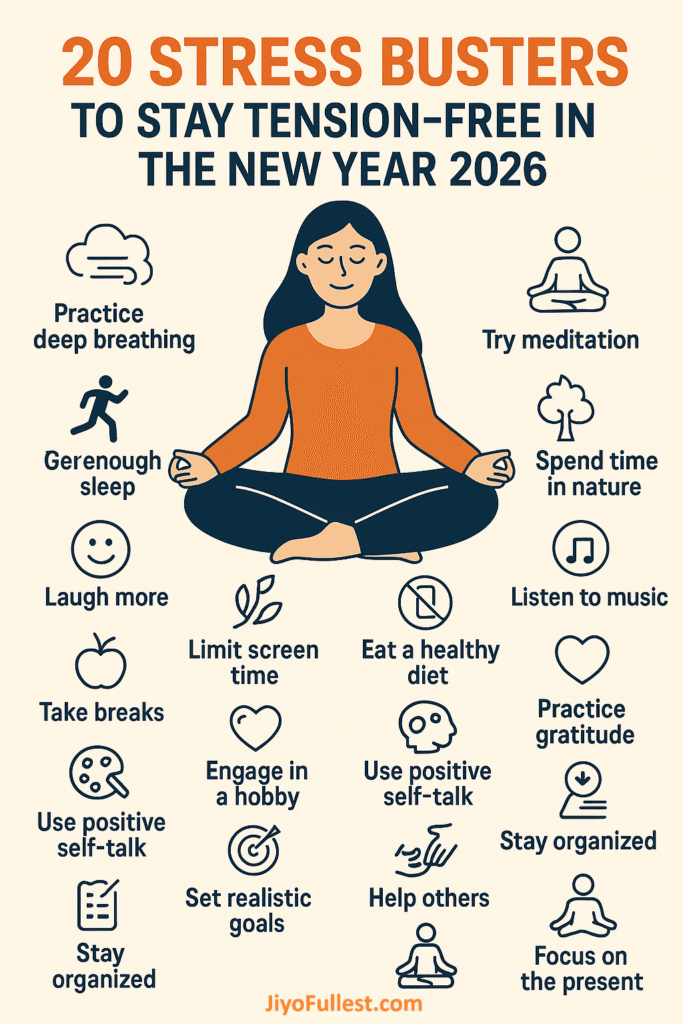
10 Additional Simple Stress Busters
Declutter your environment
Listen to calming music
Spend time in sunlight
Practice gratitude daily
Reduce caffeine intake
Take short power naps
Stretch during long work hours
Avoid negative news overload
Talk to a therapist if needed
Live in the present moment

Stress Buster Games and Activities for Immediate Relief
Games and interactive activities are among the most underrated stress relief tools available — and some of the most accessible. Unlike passive techniques such as breathing or meditation, which require a degree of mental cooperation that can be difficult when stress is acute, games redirect cognitive attention actively and break the stress response cycle through engagement and mild positive challenge.
Why Games Work as Stress Busters
The stress response narrows attention — a survival mechanism that focuses the mind on the perceived threat. Games interrupt this narrowing by demanding engagement with an alternative set of problems. They also trigger small doses of dopamine through challenge and completion, which counteracts stress-related cortisol. Research published in the journal Emotion found that playing Tetris for just 10 minutes significantly reduced intrusive thoughts and anxiety following a stressful experience — an effect the researchers attributed to the game’s demand for sustained visual-spatial attention leaving no cognitive space for rumination.
Quick Digital Stress Buster Games (Free)
Puzzle and strategy games (Tetris, 2048, Sudoku, crosswords) are the most evidence-supported. They require enough concentration to occupy the stress-cycling mind without being so challenging they create performance anxiety. A puzzle at the right difficulty level creates a state of mild flow — focused, engaged, temporarily free of the stressor.
Colouring apps (Colorfy, Pigment, Recolor) deliver a digital version of the well-documented stress relief of adult colouring — the combination of creativity, colour saturation and repetitive fine motor movement activates the parasympathetic nervous system. These apps are particularly effective during commutes or before sleep when active games may overstimulate.
Nature simulation games (Stardew Valley, Animal Crossing, Abzû) combine the stress-reducing effects of virtual nature environments with the engagement of light problem-solving. Multiple studies have found that even looking at images of nature lowers cortisol — interactive nature games extend this effect.
Word games (Wordle, Spelling Bee, Quordle) combine social engagement (the daily shared challenge) with light cognitive activation. The fixed daily format also creates a brief, contained ritual that provides structure on days when stress feels unmanageable.
Physical Stress Buster Activities and Games
Padel, badminton and table tennis are particularly effective stress busters because they combine vigorous physical activity (which burns cortisol and releases endorphins) with social interaction and real-time decision-making. The cognitive demand of tracking a fast-moving object requires enough focus to interrupt stress rumination. These sports are especially popular as stress outlets in Australia and the UK, where outdoor and indoor court facilities are widely accessible.
Swimming combines the cortisol-reducing effects of water immersion with rhythmic physical activity and controlled breathing. It is consistently rated among the highest-impact physical stress busters in research on the physiological stress response — the temperature regulation, pressure sensation and rhythm all activate parasympathetic recovery.
Creative physical activities — pottery, woodworking, gardening, cooking something complex — deliver stress relief through tactile engagement, creative expression and a visible tangible result. Making something with your hands activates a neurological reward system that evolved around physical creation and has demonstrably calming effects on the nervous system.
Group and Social Stress Buster Games
Laughter games, board games, card games and team sports all provide the stress-buffering effect of social connection alongside the cognitive redirection of play. Research consistently identifies social connection as the second most powerful stress buffer after physical exercise. Group games deliver both simultaneously — which is why an evening of board games with friends can reset stress levels more effectively than an evening of solo “relaxation.”
In New Zealand and Australia, where outdoor culture is deeply embedded, bush walking with a group, beach cricket, and community sporting events serve a dual function as both physical and social stress busters — with the added benefit of nature exposure, which independently reduces cortisol.
5-Minute Stress Buster Activities Right Now
If you need relief in the next five minutes without leaving your current location:
Draw something — anything — for 5 minutes without lifting the pen. It doesn’t need to be recognisable. The continuous line and motor focus interrupt stress cycling.
Play a word association game with someone nearby — or silently challenge yourself to find a word for every letter of the alphabet within a chosen category. The constrained cognitive task occupies the stress-amplifying part of the mind.
Watch a short comedy clip or a fail compilation. Genuine laughter — not polite laughter, but involuntary laughter — immediately reduces cortisol and releases endorphins. This is not avoidance; it is a physiological intervention.
Do a 2-minute doodle challenge: draw the most complicated possible version of a simple thing (a coffee cup, a shoe, your hand). The challenge absorbs attention without creating performance pressure.
When to Seek Professional Help
If stress becomes persistent and affects:
- Sleep
- Appetite
- Work performance
- Relationships
- Emotional stability
It may be time to consult a therapist or counselor.
Seeking help is a strength, not a weakness. In Australia, Beyond Blue (beyondblue.org.au) and MindSpot offer free support. In Canada, Wellness Together Canada provides free access to counselling. In the UK, your GP can refer you to NHS talking therapies at no cost. In the US, the NAMI helpline offers free guidance on finding local support.
Stress Management Techniques for High-Achieving Professionals
Executives, entrepreneurs, healthcare providers, and corporate leaders face a unique form of stress. Responsibility for outcomes, financial decisions, and team performance can create sustained mental pressure.
High achievers often experience:
Decision fatigue
Constant urgency
Difficulty disconnecting from work
Sleep disruption due to racing thoughts
Effective stress management at leadership levels includes:
Decision batching, where similar decisions are grouped together to reduce cognitive load.
Delegation discipline, allowing capable team members to take ownership.
Scheduled recovery time is as firmly protected as business meetings.
Weekly reflection periods to assess workload and emotional state.
Sustained leadership performance requires structured recovery. Strategic rest is not laziness; it is performance maintenance.
A 30-Day Stress Reset Plan
If stress feels overwhelming, use this structured approach.
Week 1: Sleep and Recovery Reset
Go to bed at the same time daily
Reduce screens 60 minutes before sleep
Aim for 7–9 hours
Week 2: Physical Activation
Walk 20–30 minutes daily
Stretch or practice yoga
Increase hydration
Week 3: Mental Discipline
Daily journaling
Gratitude practice
Reduce negative media intake
Week 4: Structural Adjustments
Set boundaries at work
Delegate when possible
Schedule weekly recovery time
Consistency builds resilience. Stress management is a habit, not a one-time solution.
When Stress Becomes an Anxiety Disorder
Stress is typically linked to a specific situation or trigger. Anxiety disorders, however, may persist even when no immediate threat is present.
If worry becomes excessive, constant, and difficult to control, it may indicate something beyond everyday stress.
Common signs of an anxiety disorder include:
Persistent and excessive worry
Rapid heartbeat without physical exertion
Muscle tension
Restlessness
Sleep disturbance
Panic attacks
If these symptoms continue for several weeks and interfere with daily functioning, professional evaluation is recommended.
Therapies such as cognitive behavioral therapy, stress management counseling, and in some cases, medication can significantly improve outcomes.
Recognizing the difference between stress and anxiety allows you to seek appropriate support rather than attempting to “push through” ongoing distress.
🔢 Explore More Free Numerology and Astrology Tools
- Chaldean Name Numerology Calculator → Find your Destiny, Soul Urge and Personality numbers using the ancient Babylonian system
- Life Path Number Calculator → Calculate your most important number from date of birth only
- Lucky Color Calculator → Find your zodiac sign's lucky colour by date of birth
- Numerology Compatibility Calculator → Compare Life Path compatibility with a partner by date of birth
Frequently Asked Questions About Stress
Why do I need a stress buster?
You need stress busters because stress — left unmanaged — is not neutral. Chronic stress maintains elevated cortisol levels that progressively impair immune function, sleep quality, cardiovascular health, cognitive performance and emotional regulation. Most people adapt to moderate stress as their normal baseline without recognising the cumulative toll it is taking. Stress busters interrupt this accumulation before it compounds into burnout, anxiety disorders or physical health conditions. You do not need to be in crisis to benefit from stress management — the best time to apply stress busters is before stress reaches a level where it is difficult to manage.
Do stress busters work in Australia?
Yes — and Australia has some of the strongest institutional research and support systems validating stress management techniques. Beyond Blue, the Black Dog Institute and the Australian Psychological Society have all conducted or reviewed research on stress reduction techniques in Australian contexts, consistently finding that exercise, sleep quality, mindfulness and social connection significantly reduce both perceived stress scores and physiological stress markers. The specific stressors Australians commonly face — workplace pressure, cost of living, geographic isolation in rural areas, and drought-related financial stress in agricultural communities — respond to the same evidence-based techniques, adapted where necessary to the Australian context. If you are in Australia and experiencing high or persistent stress, the Beyond Blue support service (1300 22 4636) and MindSpot Clinic offer free, evidence-based support.
What are the most common stressors in New Zealand?
The New Zealand Mental Health Foundation identifies workplace stress and financial pressure as the two most prevalent stressors across the New Zealand population. For Māori and Pacific communities, additional systemic pressures including housing insecurity, access to healthcare, and historical and ongoing social inequality create compounding stress factors that require culturally responsive approaches in addition to general stress management techniques. New Zealand’s 1737 helpline (call or text 1737) offers free access to trained counsellors and is available 24 hours, seven days a week. The Mental Health Foundation of New Zealand also provides free self-help resources specifically developed for the New Zealand context.
What are the hidden causes of stress?
The most common hidden stress drivers are perfectionism and impossibly high internal standards, digital overstimulation from constant connectivity and notifications, unprocessed emotions that convert into stored physiological tension, poor sleep quality (not just insufficient duration), lack of perceived autonomy or control over circumstances, and social comparison anxiety amplified by social media. These hidden causes maintain a low-grade stress activation that many people experience as a persistent background tension without being able to identify a specific source. Addressing hidden stress causes typically requires honest self-reflection, not more stress management techniques — the technique library already works, but it works on the surface while the underlying driver continues.
How can I reduce stress quickly?
The fastest-acting evidence-based techniques are: the 4-7-8 breathing method (inhale 4 seconds, hold 7, exhale 8 — activates the parasympathetic nervous system within 60 seconds), the 5-4-3-2-1 grounding technique (engaging all five senses to interrupt stress cycling), splashing cold water on your face (triggers the dive reflex, immediately reducing heart rate), and stepping outside for 5 minutes (nature exposure measurably reduces cortisol). For sustained quick relief, a 10-minute puzzle or game — even on your phone — interrupts stress rumination more reliably than passive relaxation for many people. To understand your current stress level before applying techniques, take our free PSS-10 Stress Level Calculator.
What are common symptoms of stress?
Physical symptoms include headaches, muscle tension (particularly in the neck, shoulders and jaw), disrupted sleep, digestive changes, fatigue, rapid heartbeat and chest tightness. Cognitive symptoms include difficulty concentrating, memory problems, negative thinking loops and decision fatigue. Emotional symptoms include irritability, mood swings, anxiety, feeling overwhelmed and emotional reactivity that seems disproportionate to triggers. Behavioural symptoms include withdrawing from social contact, changes in eating patterns, increased use of alcohol or caffeine, and procrastination despite urgency. If you are experiencing multiple symptoms across these categories persistently, your stress level likely warrants active management rather than passive endurance.
Can stress make you physically sick?
Yes — consistently and through multiple biological pathways. Chronic stress maintains elevated cortisol which progressively suppresses immune function, making you more susceptible to infections and slower to recover. Long-term elevated cortisol also contributes to systemic inflammation, which is a recognised risk factor for cardiovascular disease, type 2 diabetes, and digestive disorders including IBS. Stress-related sleep disruption compounds these effects, since most immune regulation and tissue repair occurs during deep sleep. The relationship between chronic stress and physical illness is well-established in the research literature — stress management is preventative healthcare, not a lifestyle luxury.
What is positive stress (eustress)?
Positive stress — called eustress by psychologists — is short-term stress associated with a challenge you believe you can meet and that has a meaningful outcome. A job interview, a sports competition, a public presentation or a new project can all generate eustress. Unlike chronic or overwhelming stress, eustress improves performance, sharpens focus and can generate a sense of aliveness and engagement. The distinction between eustress and distress is primarily about perceived control and duration — eustress feels challenging but manageable and has an end point, while distress feels overwhelming, uncontrollable or without resolution.
What is the best natural stress relief method?
No single method universally outperforms all others — but the research consistently identifies three as having the strongest and most durable effect across populations: regular physical exercise (particularly aerobic activity of 20–30 minutes, which directly metabolises cortisol and releases endorphins), consistent high-quality sleep (which regulates the biological stress response systems that control cortisol, adrenaline and inflammatory markers), and genuine social connection (which activates the parasympathetic nervous system and provides the stress-buffering effect of oxytocin). Among active techniques, diaphragmatic breathing has the strongest evidence base for immediate effects. Among longer-term practices, mindfulness-based stress reduction (MBSR) has the most rigorous clinical evidence across diverse populations including Australia, UK, Canada and the US.
Final Thoughts
Stress is not something to eliminate completely. It is something to manage intelligently.
By combining immediate calming techniques with long-term lifestyle habits, you can protect your mental clarity, emotional balance, and physical health.
Start with one or two stress busters today. Consistency matters more than intensity.
Your well-being deserves priority.
One of the most consistent stress busters for anxiety specifically is having a structured app you return to daily — our review of the best mental health apps for anxiety in 2026 covers the ones that actually deliver results: Best Mental Health Apps for Anxiety
Recent Posts
- 25 Aura Colors and Their Meanings: Chart, Shades and How to Find Yours
- Best Freelance Skills for Teens in 2027: 12 Skills to Learn First (and How to Choose)
- Best Homework Help Websites in 2027: 25 Free and Paid Sites for Every Subject
- How to Build a Writing Portfolio as a Teen With No Experience
- Best Skincare Routine for a Natural Glow (Morning & Night)