
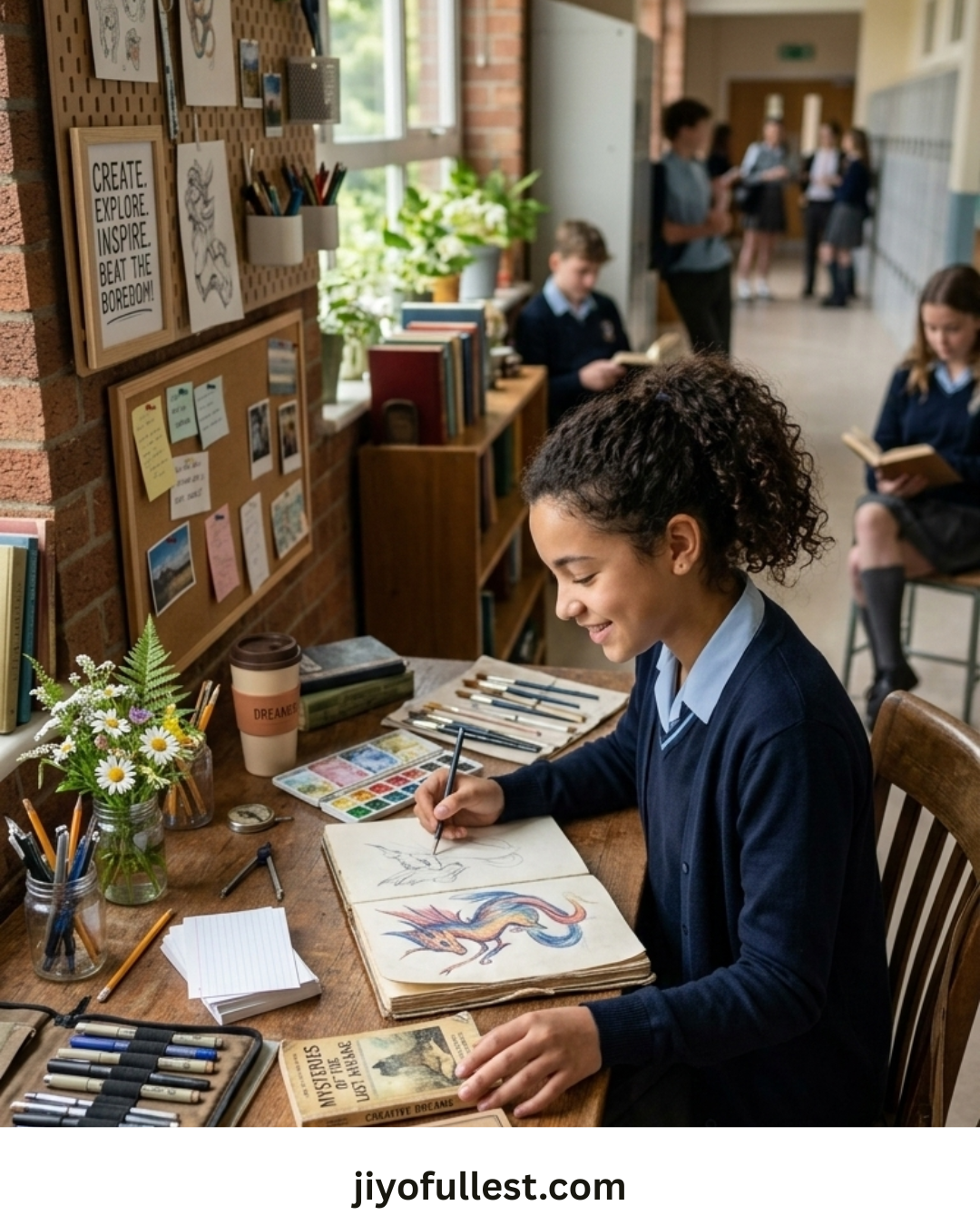
That slow moment in class when the clock seems frozen can feel endless. Your mind drifts, the lesson feels miles away from your interest, and the first instinct is to grab your phone. But sometimes phones aren’t allowed — or scrolling just makes the boredom worse.
If you’ve been searching for things to do when bored at school, you’re probably looking for simple ways to stay occupied without getting in trouble or distracting the whole class. The good news is that boredom doesn’t have to mean zoning out completely. There are small, low-key activities you can do at your desk that keep your brain engaged without being obvious.
This guide shares practical ideas that actually work during school hours. Some help pass the time quietly, some make learning a little more interesting, and others simply give your mind something creative to focus on when the day starts dragging.
Sometimes boredom isn’t about the class being impossible. It’s just about needing something to keep your mind active.
1. Doodle in the Margins of Your Notebook
Doodling is one of the easiest things to do when bored at school because it looks like normal note-taking from a distance.
You can draw small patterns, cartoon characters, shapes, or even design imaginary logos. Many students start with simple repeating patterns like spirals, stars, or geometric shapes.
Interestingly, doodling can also help with focus. When your hands stay lightly engaged, your brain is less likely to drift completely away from the lesson.
For example, you might draw a small vine pattern along the edge of your notes while still listening to the teacher. It keeps your mind active without being disruptive.
2. Turn Your Notes Into Visual Diagrams
Transforming notes into diagrams can make boring material slightly more interesting.
Instead of writing plain sentences, try drawing arrows, flow charts, or little icons next to key ideas. History timelines, science processes, or vocabulary words can all be organized visually.
This works well because it activates creativity while still keeping you connected to the lesson.
A student studying biology might sketch a rough diagram of a plant cell while the teacher talks, turning a dry concept into something easier to remember.
3. Create Tiny Comics
Drawing mini comics is a fun way to pass time discreetly.
Use the corner of your notebook page and create a simple four-panel story. It doesn’t need to be complex. Maybe it’s about a pencil going on an adventure or a funny classroom moment.
These little comics are quick, creative, and easy to hide within your notes.
Over time, you might even build a small collection of characters or running jokes.
🎓 Planning What Comes Next?
AI skills, careers, side hustles, and smart choices for using AI wisely — everything to get a head start.
4. Write Short Stories or Random Ideas
Creative writing can be surprisingly engaging when you’re bored.
Start with a random sentence like:
“A mysterious package appeared on my desk.”
Then continue the story for a few paragraphs whenever you have free moments.
The story doesn’t need to be perfect or even finished. The goal is simply to give your imagination something to play with.
Many students find that storytelling makes time pass much faster
5. Invent Quiet Word Games
Word games are great for keeping your brain active without drawing attention.
You can challenge yourself to:
Think of as many words as possible starting with a certain letter
Create rhyming words for something the teacher says
Build a long word chain where the last letter starts the next word
These games work especially well during slower lessons because they stimulate your mind without requiring materials.
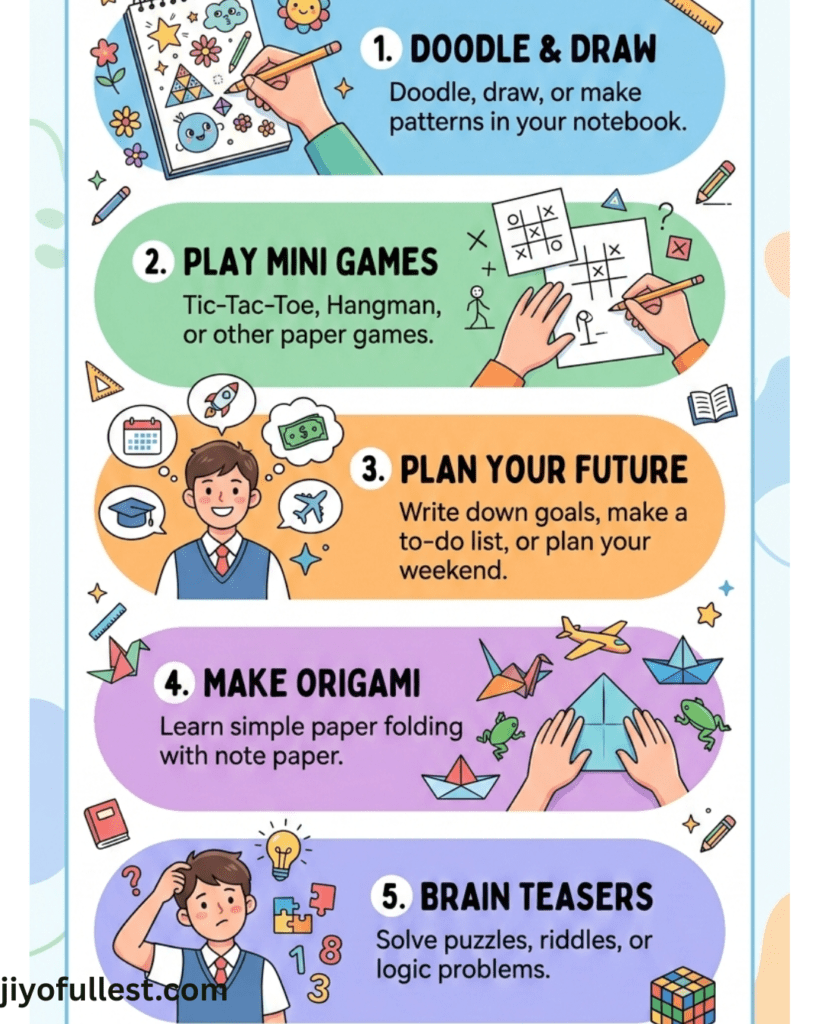
6. Plan Something You're Excited About
Future planning can make boring moments feel productive.
Use the time to think about something fun coming up — a weekend plan, a trip, a birthday, or even a personal goal.
Write down ideas, possible activities, or things you want to try.
For example, you might plan a small movie night with friends or list places you’d like to visit in your city.
Turning boredom into planning time helps your brain shift from frustration to anticipation.
If you enjoy planning ahead, you might also find ideas in our guide on fun things to do by yourself on a weekend — it covers creative solo activities that are easy to organise with nothing but free time and curiosity.
😌 Bored, Stressed, or Just Need Ideas?
Hobbies, books, group activities, and real ways to handle teenage stress — for when school feels like a lot.
7. Improve Your Handwriting
Practicing handwriting might sound simple, but it can be oddly satisfying.
Choose a few sentences from your notes and rewrite them slowly using different styles — cursive, block letters, or calligraphy-inspired lettering.
You can also experiment with headings, underlines, and decorative styles for titles.
Over time, your notes start to look cleaner and more visually appealing.
8. Challenge Your Memory
Memory challenges are quiet mental games you can play anywhere.
Look around the classroom for 10 seconds. Then look down and try to remember everything you noticed: colors, objects, posters, or classmates’ clothing.
You can also try memorizing short lists or recalling details from earlier in the day.
These exercises strengthen focus and attention while keeping boredom away.
9. Create a Small Personal Goal List
Goal lists give your mind something constructive to think about.
Write down small goals you’d like to achieve over the next few weeks. They don’t have to be serious.
Examples might include:
Finish reading a certain book
Learn a simple recipe
Practice drawing more often
Try a new hobby
If you want a bigger list of ideas specifically for when you’re stuck in class, our guide on 50 things to do when bored in school covers everything from quiet games to productive ways to use dead time between lessons.
Thinking about goals gives boredom a productive direction.
10. Draw Maps From Memory
Memory maps are a surprisingly fun challenge.
Try drawing a map of your neighborhood, school layout, or route from home to school without looking at anything.
Include streets, landmarks, parks, or stores you remember.
It turns boredom into a small puzzle and strengthens spatial memory at the same time
11. Practice Silent Observation
Observation exercises are simple but powerful.
Pick one object in the classroom — maybe the clock, a backpack, or a plant. Spend a minute studying it carefully.
Notice details you usually ignore: textures, shadows, shapes, and colors.
This activity improves attention and can even make ordinary environments feel more interesting.
12. Learn Something Small Each Day
Micro-learning is a great way to turn boredom into growth.
Choose something simple to learn each day, like:
A new word
A historical fact
A math trick
A foreign language phrase
Write it down and see if you can remember it later.
Small pieces of knowledge accumulate surprisingly quickly.
13. Create a Personal Idea List
Idea lists are perfect for moments when your mind is wandering.
Write headings like:
Movies I want to watch
Books I want to read
Places I want to visit
Skills I want to learn
Then add ideas whenever they pop into your mind.
Over time, these lists become helpful references for future plans.
If you want to use downtime productively, there are some genuinely interesting creative ways teens are using AI in school that go well beyond homework help.
14. Make Up Brain Teasers
Brain teasers are fun challenges you can invent yourself.
Create small puzzles like:
Riddles
Math tricks
Logic questions
Then try solving them later or sharing them with friends.
This keeps your mind engaged without requiring much space or attention.
15. Practice Mindful Breathing
Sometimes boredom is actually mental fatigue.
Mindful breathing can reset your focus without anyone noticing.
Take slow breaths and pay attention to the rhythm of your breathing for a minute or two. It helps calm racing thoughts and improves concentration.
Many students find that a short breathing break makes the rest of the class easier to sit through.
If you find that boredom at school often follows you home and turns into restless, racing thoughts at night, our guide on how to stop overthinking at night has practical techniques to help your mind properly switch off once the school day is done.
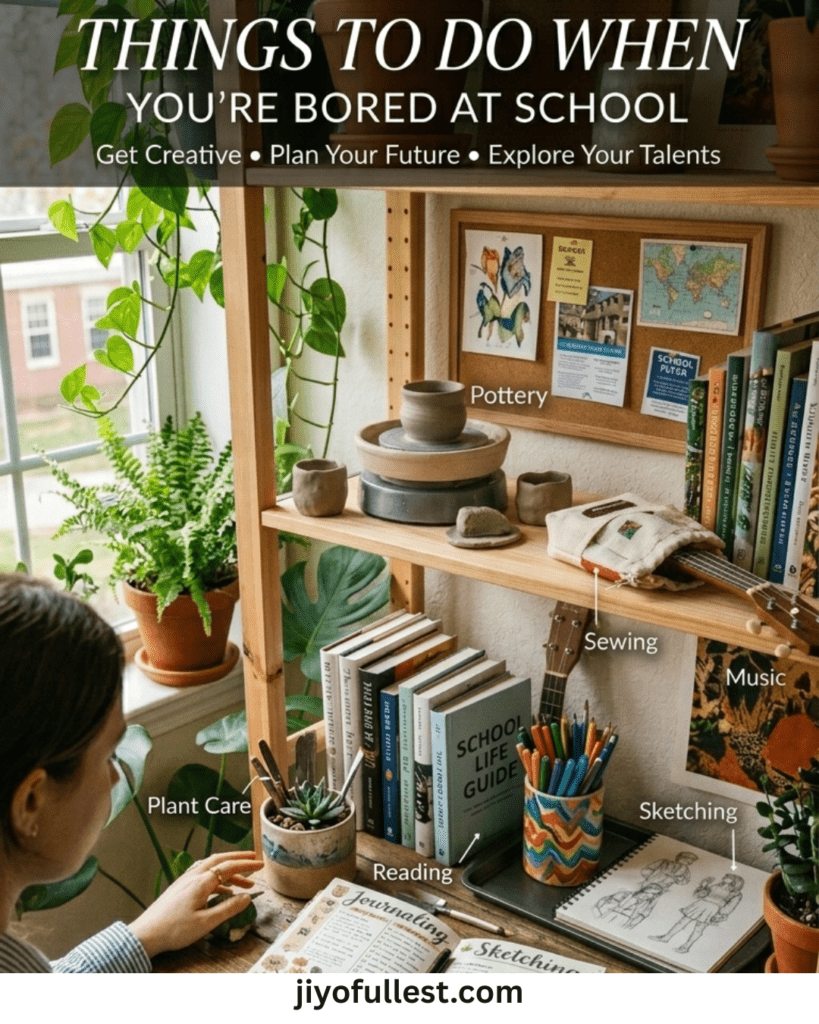
Why School Boredom Happens
Boredom in school is extremely common.
Classes sometimes move more slowly than your natural attention span, or the subject simply doesn’t connect with your interests. Your brain looks for stimulation, which is why phones feel so tempting.
The key isn’t eliminating boredom completely — that’s unrealistic. Instead, it’s learning small ways to stay mentally active during slower moments.
Activities like drawing, writing, or quiet mental games give your brain something to do without causing distractions.
Over time, these habits can even make long classes feel shorter.
Boredom can also be a sign that you need more stimulation than a standard school day offers. If you’re the kind of person whose mind is always looking for something new to explore, our list of hobbies to pick up when you’re bored with everything is worth a look — it covers creative, physical, and digital hobbies that work for teenagers with different interests and energy levels.
How to Stay Engaged Without Getting in Trouble
If you try these ideas, keep a few things in mind.
First, stay respectful of the classroom environment. Activities should be quiet and subtle so they don’t disrupt others.
Second, avoid anything that completely disconnects you from the lesson. The goal isn’t to ignore the class — it’s to stay mentally active during slower moments.
And finally, rotate between different activities so they don’t become boring themselves.
Even small changes can make a long school day feel much easier.
Conclusion
Being bored at school is something almost every student experiences. Long lessons, repetitive routines, and limited freedom can make time feel slow. But boredom doesn’t have to mean staring at the clock or reaching for your phone.
Simple activities like doodling, writing mini stories, playing quiet word games, or practicing observation can keep your mind engaged while still respecting the classroom environment. These small habits turn idle moments into opportunities for creativity, curiosity, and focus. And if you’re looking for something more active to do once school is over for the day, our guide on fun computer games to play when bored covers browser-based and free games you can jump into instantly — no downloads, no setup.
Sometimes the difference between a dull class and a manageable one is just having a few ideas ready when your mind starts to wander.
Things to Do When You're Bored at School – FAQ
Why do I get bored at school so easily?
Boredom at school usually happens when lessons move slower than your attention span or when the topic doesn’t immediately feel interesting. Your brain naturally looks for stimulation, which is why you might feel restless or distracted during long classes.
It’s a common experience for many students and doesn’t necessarily mean you dislike learning. Often, it just means your mind needs small ways to stay engaged.
Is it bad to be bored in class sometimes?
Not necessarily. Occasional boredom is normal and can even encourage creativity. When your brain isn’t constantly stimulated, it sometimes starts generating new ideas or thoughts.
The key is finding quiet activities that help you stay mentally active without distracting the class.
What can I do when phones are not allowed in school?
There are many phone-free options that are still fun and subtle. Activities like doodling, writing short stories, creating word games, practicing handwriting, or drawing memory maps can keep your mind busy while still looking like normal notebook work.
These kinds of activities are especially helpful in classrooms where devices aren’t allowed.
Can doodling actually help with focus?
Yes, for many people it can. Light doodling keeps your hands occupied, which can help prevent your mind from drifting too far away from the lesson.
It works best when the drawings are simple patterns or small sketches that don’t require intense concentration.
How do I stay engaged in class without getting in trouble?
Choose activities that are quiet, small, and easy to hide within your notes. For example, doodling in the margins, organizing notes visually, or writing short creative ideas are usually safe options.
The goal is to stay mentally active without disrupting the class or ignoring the lesson completely.
What if every class feels boring?
If boredom happens in most classes, it may help to mix small mental challenges into your routine. Creating mini games, writing creative ideas, or setting personal learning goals during class can make the day feel less repetitive.
Sometimes simply changing how you take notes or interact with the material can make a big difference.
Can boredom in school affect learning?
It can if it leads to completely zoning out. When boredom becomes constant, students may stop paying attention to important information.
Finding small ways to stay engaged — even through quiet creative activities — can help maintain focus and improve memory of what’s being taught.
How can I make school feel less repetitive?
Trying different note-taking styles, setting small personal challenges during class, or using free moments for creative thinking can help break the monotony.
Even small changes in how you use your time during lessons can make the school day feel more interesting and productive.
Recent Posts
- Aquarius Zodiac Sign: Personality, Love, Career & Compatibility
- Pisces Zodiac Sign: Personality, Love, Career & Compatibility
- Libra Zodiac Sign: Personality, Love, Career & Compatibility
- Capricorn Zodiac Sign: Personality, Love & Compatibility
- Taurus Zodiac Sign: Personality, Love, Career & Compatibility