
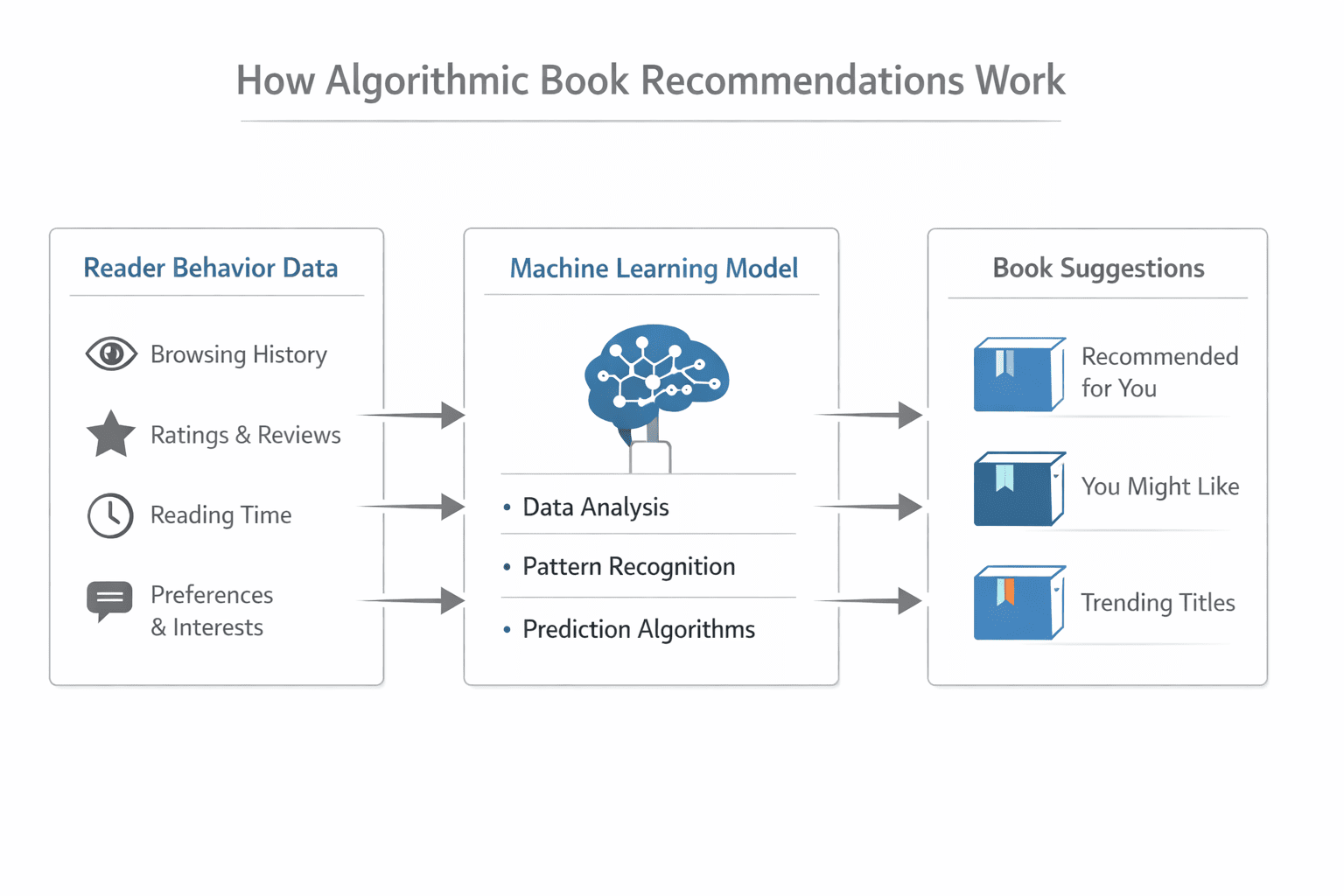
Algorithmic recommendations increasingly shape how readers discover books in digital spaces. Behind every suggested title lies a system that studies reading behavior search patterns and engagement signals to predict what might resonate next. These systems influence not only what appears on a screen but also how ideas stories and voices travel through the modern reading ecosystem.
As digital libraries expand the challenge of discovery grows more complex. Readers navigate vast collections where attention becomes the most valuable currency. Some explore openly guided by curiosity while others follow subtle algorithmic cues that surface books aligned with mood genre or past reading choices. This blend of data driven guidance and personal instinct defines today’s reading experience.
At the center of this shift lies a quiet transformation. Algorithms act like unseen librarians continuously learning from each interaction and refining their suggestions. Yet discovery remains deeply human shaped by curiosity emotion and the desire for meaning. Understanding how these systems work and where their limits lie is becoming essential for readers writers and the future of book culture itself.
Key Takeaways
Algorithmic recommendations now influence how most readers discover new books online
Reader behavior signals shape what books gain visibility over time
Algorithms support discovery but do not replace human curiosity
Ethical and transparent recommendation systems are shaping the future of reading
Readers shift between old habits and new signals as taste evolves with every page. Some wander through vast archives where continuous learning feels easier with the help of library and stumble upon titles that shape long stretches of thought. Others follow trails built by algorithms that highlight works based on mood genre or subtle reading cues.
How Algorithms Shape Reading Journeys
Algorithmic recommendation engines observe actions that hint at interest. A saved chapter or a paused audiobook can steer the next suggestion. This creates a living map that changes with each small choice. The process feels simple yet holds a kind of alchemy as small traces of attention combine to form new paths.
This power invites a fresh look at how stories rise or fade within public view. Classic works hold steady yet new voices can jump into sight thanks to clever signals pulled from reader behavior. A story that once drifted in the background can surface like a forgotten melody once the system senses a match between theme and desire.
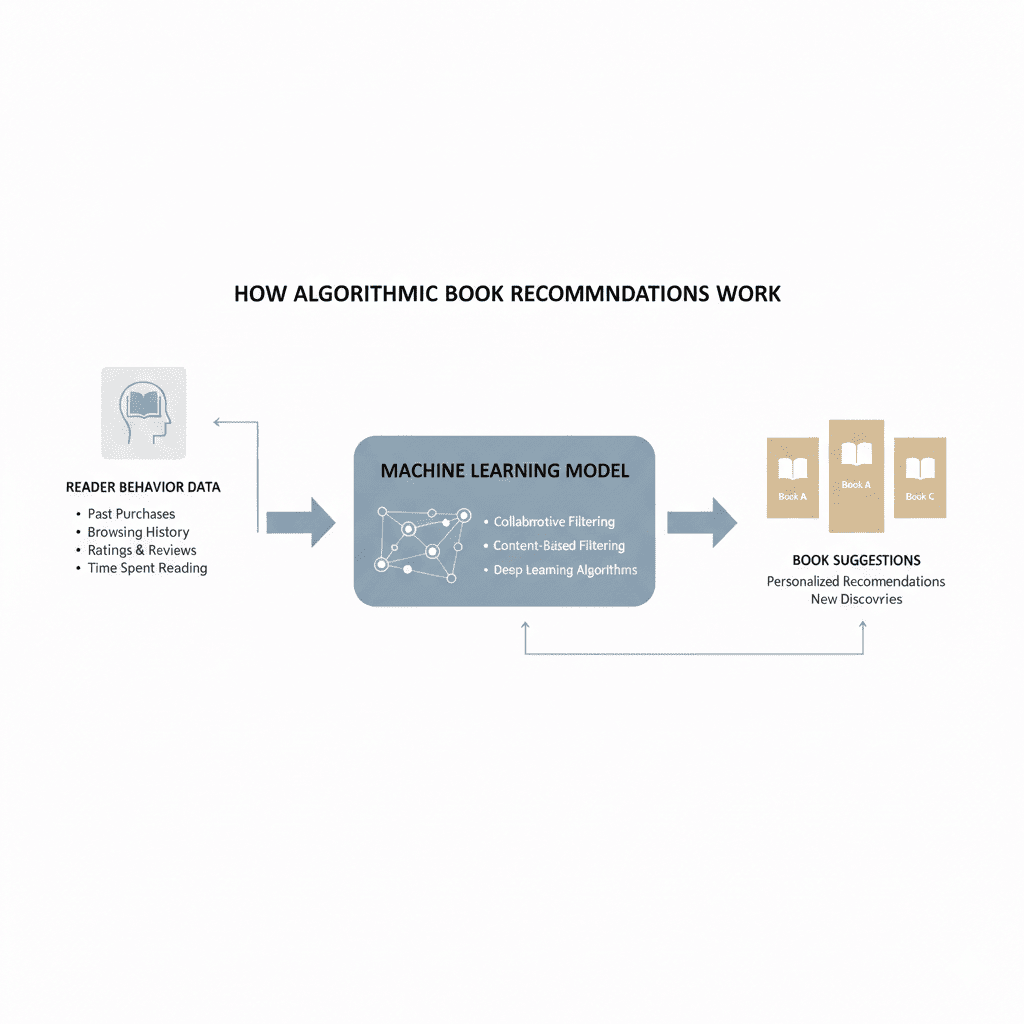
How Algorithmic Book Discovery Works
A simplified view of how reader behavior, content signals, and machine learning systems influence book recommendations.
Benefits and Challenges of Algorithmic Book Recommendations
Benefits
Faster discovery across large digital libraries
Personalized reading suggestions
Greater visibility for niche and independent authors
Challenges
Popularity bias toward already successful titles
Risk of narrowing reader exposure
Limited transparency in recommendation logic
Why Human Taste Still Matters
Data can guide discovery but human taste provides the spark that keeps reading alive. A good recommendation triggers a sense of recognition as if an unseen hand pointed to an idea waiting to be found. Story worlds expand through this blend of pattern and instinct. Even with strong algorithms human curiosity sets the pace.
Writers also gain strength from these systems. Their work can reach unexpected readers who respond to tone style or fresh perspective. A good match often feels like catching lightning in a bottle as a small hint within the text lights up the algorithm and opens the door to new audiences.
A closer look at this shift shows how readers make sense of these tools through several key patterns:
Discovering through Echoes
Some readers find new books when an echo of a past favorite rings true. A familiar voice or theme triggers a gentle nudge forward. The system notes the echo and uses it to guide further exploration. These echoes help form personal chains of stories that feel handpicked. The result builds a steady rhythm of discovery that grows over time.
Serendipity in Motion
Chance still plays a part even within algorithms. A rare choice or an unexpected click can send the system down a new trail. Serendipity feels alive as a single action reshapes what appears next. Many readers enjoy this spark of chance because it mirrors the thrill of wandering through a crowded bookstall and spotting a hidden gem.
From a reader’s perspective algorithmic discovery reduces the effort required to find meaningful books. At the same time too much personalization can quietly shape reading habits. Balanced recommendation systems that allow room for exploration tend to create richer long term reading experiences.
Collective Reading Fields
Shared interest often creates fields of attention where certain books begin to cluster. Algorithms detect these clusters and suggest titles that resonate within them. A reader might step into one of these fields unintentionally yet stay for the sense of connection it brings. These fields shift as tastes rise or fall and they help stories move through communities both large and small.
These patterns reveal how systems and readers move in tandem as discovery grows richer through this dance.
Algorithmic recommendation systems influence not only book discovery but also how people interact with AI driven content, shaping trust, bias, and decision making across digital platforms.
The Future of Algorithmic Book Discovery
Future recommendation systems are moving toward greater transparency reader control and ethical design. Explainable AI and adjustable recommendation settings may allow readers to influence how algorithms shape their discovery journey.
Toward a Wiser Reading Future
The future of book discovery rests on balance. Algorithms must remain transparent and thoughtful so readers can trust the pathways they offer. At the same time personal taste must stay at the heart of each choice. Reading thrives when guided by tools that support imagination rather than overshadow it. In the end stories continue to find their way and readers follow with open minds ready for the next spark.
FAQs on Future of Book Discovery
What are algorithmic recommendations in book discovery?
Algorithmic recommendations are automated systems that suggest books to readers based on data such as reading history, search behavior, ratings, and engagement patterns. These systems use machine learning models to predict which books a reader is most likely to enjoy.
How do book recommendation algorithms work?
Book recommendation algorithms analyze user behavior data, content metadata, and similarity patterns. They combine techniques like collaborative filtering, content based filtering, and behavioral analysis to personalize book suggestions at scale.
Why are algorithms important for discovering new books?
Algorithms help readers find relevant books faster in an overcrowded digital marketplace. With millions of titles available, algorithmic recommendations reduce choice overload by surfacing books aligned with a reader’s interests, habits, and preferences.
Do recommendation algorithms replace human book curators?
No. Algorithms complement rather than replace human curators. While algorithms excel at scale and personalization, human editors provide cultural context, thematic depth, and curated perspectives that algorithms cannot fully replicate.
Can algorithms influence what books become popular?
Yes. Algorithmic visibility strongly impacts book popularity. Books that receive early engagement signals are more likely to be promoted further, creating feedback loops that can accelerate visibility and sales.
Are algorithmic book recommendations biased?
Algorithmic bias can occur if recommendation systems rely heavily on historical data. This may favor already popular authors or genres while underrepresenting new, diverse, or niche voices unless systems are intentionally designed to counterbalance this effect.
How do algorithms affect new and independent authors?
Algorithms can both help and hinder independent authors. While discovery barriers exist, strong engagement metrics such as reviews, completion rates, and reader interaction can enable independent books to surface alongside traditionally published titles.
What role does reader data play in book recommendations?
Reader data such as browsing behavior, reading completion, ratings, and time spent on books is central to algorithmic personalization. This data helps systems continuously refine and improve recommendation accuracy.
Are algorithmic recommendations good for readers?
For readers, algorithmic recommendations improve convenience, relevance, and discovery efficiency. However, excessive personalization may limit exposure to unfamiliar genres or viewpoints if not balanced with exploratory recommendations.
How are AI and machine learning changing book discovery?
AI and machine learning enable real time personalization, natural language understanding of book content, and predictive modeling of reader interests. This allows recommendation systems to move beyond genre labels into deeper thematic and emotional matching.
Can authors optimize their books for algorithmic discovery?
Yes. Authors can improve discoverability by optimizing metadata, categories, keywords, descriptions, reader engagement signals, and consistency across platforms. Algorithms rely heavily on structured and behavioral signals to rank recommendations.
What is the future of algorithmic book discovery?
The future of book discovery will combine AI driven personalization with ethical design, transparency, and human curation. Emerging models aim to balance relevance, diversity, and serendipity while giving readers more control over recommendation systems.
Algorithmic book discovery highlights how AI systems influence personal choice and responsibility, a theme that also appears in discussions about AI and teen responsibility in digital spaces.
Recent Posts
- How to Calm Anxiety Fast: 10 Techniques That Work in Under 5 Minutes
- Best Mental Health Apps for Anxiety in 2026 (Free and Paid)
- Morning Routine Ideas for Anxiety and Stress Relief
- Creative Ways Teens Are Using AI in School (2026 Guide for UK, Australia and Canada)
- Productive Things to Do When You Have No Motivation