
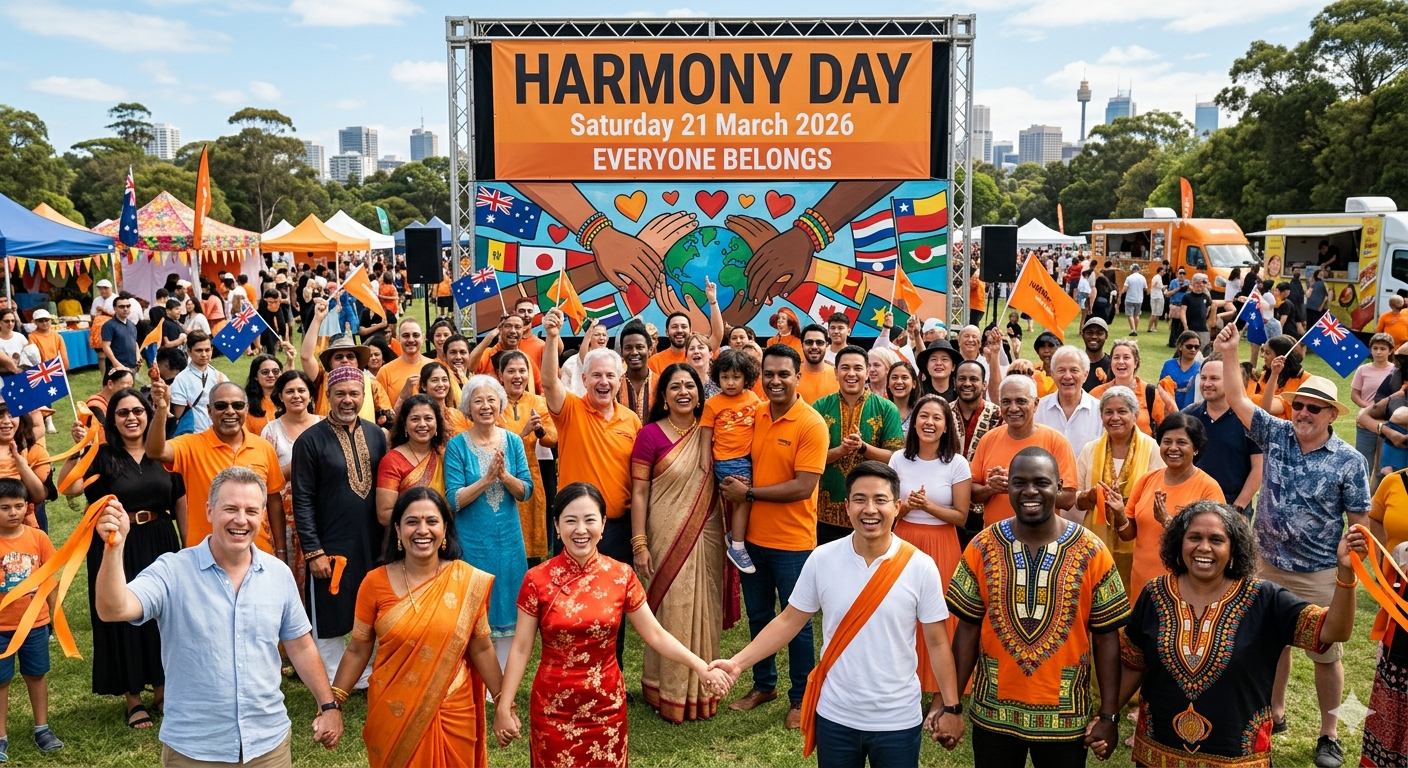
Every year on 21 March, Australia pauses to celebrate something that makes the country genuinely unique: the fact that people from more than 300 cultural backgrounds, speaking hundreds of languages, have built a life here together.
Harmony Day is not a public holiday. It doesn’t come with fireworks or a day off work. What it comes with is something quieter and arguably more meaningful — a national moment to look around at the people beside you, in your classroom, your workplace, your neighbourhood, and recognise that their story is part of yours too.
The official message has stayed consistent since the day was established: “Everyone Belongs.” In 2026, those two words carry more weight than ever. At a time when conversations about migration, identity and cultural belonging are louder and more contested globally, Australia’s commitment to marking March 21st as a day of unity rather than division is worth paying attention to.
This guide covers everything you need to know about Harmony Day 2026 — its history, significance, how it’s celebrated across Australian schools, workplaces and communities, the meaning of the colour orange, and how you can participate wherever you are.
If you’re observing the full weekend, Harmony Day falls the day after the United Nations’ International Day of Happiness on March 20th — making the last weekend of March 2026 one of the most meaningful on the Australian calendar.
Harmony Day 2026 — Theme and What It Means This Year
Harmony Day 2026 falls on Saturday, 21 March — coinciding this year with both the United Nations’ International Day for the Elimination of Racial Discrimination and the day after International Day of Happiness on March 20th. This back-to-back positioning makes the final weekend of March 2026 one of the most culturally significant of the year in Australia.
The enduring message of Harmony Day — “Everyone Belongs” — remains the centrepiece of 2026 celebrations. The phrase was introduced by the Australian Government’s Department of Home Affairs and has become the defining slogan of the day across schools, workplaces and community events nationwide.
In 2026, Harmony Day carries additional resonance against a backdrop of rising global conversations about migration, belonging and cultural identity. Australia — one of the most culturally diverse nations on earth, with more than 300 languages spoken and nearly half of all residents born overseas or having at least one overseas-born parent — has particular reason to mark the day meaningfully.
If you’re celebrating both March 20th and March 21st this year, our guide on the International Day of Happiness 2026 covers the Happiness Day theme and wishes — the two days together make for a powerful weekend of reflection on wellbeing and belonging.
When is Harmony Day?
Harmony Day is celebrated on March 21st each year.
What is Harmony Day?
Harmony Day is a day of celebration and recognition of the cultural diversity within communities. It encourages people to respect and appreciate each other’s differences while fostering a sense of belonging and unity. Harmony Day promotes the values of tolerance, inclusivity, and understanding across all cultural, linguistic, and religious backgrounds.
Harmony Day History
Harmony Day originated in Australia in 1999 as a government initiative to promote inclusivity, respect, and cultural diversity. It was initially known as the International Day for the Elimination of Racial Discrimination and was later renamed Harmony Day to emphasize unity and togetherness among all Australians, regardless of their cultural or ethnic backgrounds.
How Harmony Day Is Observed Across Australia in 2026
Harmony Day is observed differently depending on setting — here is how it typically unfolds across Australian schools, workplaces and communities:
Schools: The Department of Education in every Australian state and territory provides Harmony Day resources for teachers. Students typically participate in multicultural food sharing, cultural dress days, classroom discussions about belonging, and creative projects exploring their own cultural backgrounds. Orange is worn throughout the day — teachers often organise “wear orange” competitions and classroom displays. In Victoria and NSW, Harmony Day assemblies are a standard feature of the school calendar.
Workplaces: Australian employers — particularly those in the public sector and large corporates — mark Harmony Day with morning teas featuring multicultural foods, cultural awareness training sessions, and internal communications celebrating workforce diversity. The Australian Human Rights Commission provides free workplace resources each year. Many organisations use the day as a touchpoint for reviewing their diversity and inclusion commitments.
Community Events: Local councils across Australia organise free community events — cultural festivals, performances, art installations and markets. Melbourne, Sydney, Brisbane and Perth all typically host public Harmony Day events, and regional councils in areas with significant multicultural populations often run their largest community events of the year on March 21st.
Online: Australians share orange-themed social media content, cultural stories, and the hashtag #HarmonyDay across Instagram, Facebook and TikTok. Schools and community groups share photos of students in orange — making it one of the most visually recognisable Australian awareness days of the year.
Harmony Day Significance
Harmony Day holds significant importance as it encourages people to embrace diversity, foster mutual respect, and create inclusive communities where everyone feels valued and accepted. It promotes the idea that cultural diversity is a strength that enriches societies and contributes to social harmony.
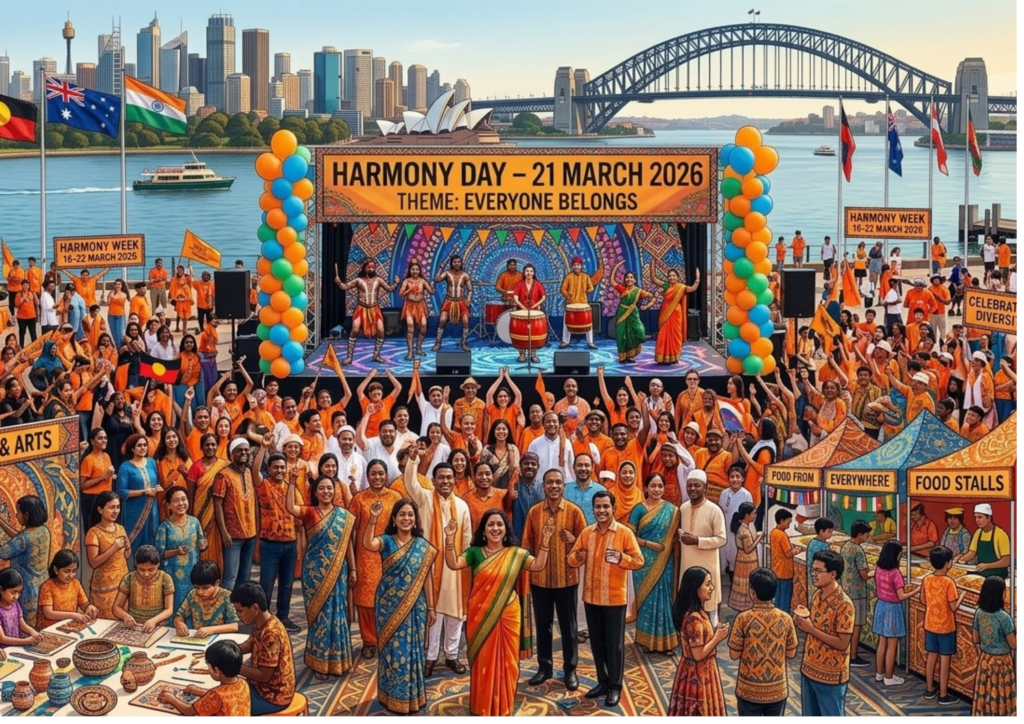
How Harmony Day is Celebrated:
Cultural Performances: Many communities organize cultural performances such as music, dance, and art exhibitions showcasing the diversity of traditions and heritage.
Multicultural Food Festivals: Harmony Day often features multicultural food festivals where people can sample cuisines from different cultures and learn about culinary traditions.
Workshops and Seminars: Educational workshops, seminars, and discussions are held to promote cultural awareness, inclusivity, and understanding of different perspectives.
Community Events: Various community events, including picnics, parades, and storytelling sessions, bring people together to celebrate diversity and unity.
School Activities: Schools organize activities and lessons focusing on cultural diversity, tolerance, and respect. Students learn about different cultures, languages, and traditions.
Wearing Orange: Orange is the official color of Harmony Day, and people are encouraged to wear orange clothing or accessories as a symbol of inclusivity and unity.
Harmony, Belonging and Mental Wellbeing — They're Connected
Harmony Day is about more than cultural diversity — at its core, it’s about belonging. And the research is clear: feeling like you belong, that you are accepted and valued, is one of the strongest predictors of mental wellbeing.
For many Australians — particularly those from migrant backgrounds, regional communities, or anyone who has felt like an outsider — the feelings Harmony Day stirs up are not always straightforward. If today has brought up anything worth sitting with, these guides may help:
- If other people’s judgement affects your sense of belonging → how to stop caring what people think
- If stress has been building and you need a reset → 25 proven stress busters
- If you’re supporting someone who feels isolated or excluded → signs someone is draining your energy
- If you want free mental health support tools → free mental health apps available in Australia
- If you want to understand what genuinely builds happiness → how to be happy: 28 habits that actually work
Belonging is not just a social value. It is a mental health one.
FAQs on Harmony Day:
What is the significance of the color orange on Harmony Day?
Orange symbolizes social communication, interaction, and mutual understanding. It represents harmony, warmth, and inclusivity.
Who can participate in Harmony Day celebrations?
Harmony Day celebrations are open to everyone, regardless of age, background, or nationality. It is a day for all individuals and communities to come together and celebrate diversity.
Why is Harmony Day important?
Harmony Day is important as it promotes social cohesion, cultural respect, and inclusivity. It encourages people to embrace diversity and create harmonious relationships within society.
How can I contribute to Harmony Day?
You can contribute to Harmony Day by organizing or participating in events that celebrate diversity, promoting cultural understanding, and fostering inclusive practices in your community.
What are some ways to promote harmony and inclusivity beyond Harmony Day?
Beyond Harmony Day, you can promote harmony and inclusivity by advocating for equality, challenging stereotypes, fostering intercultural friendships, and supporting initiatives that promote diversity and inclusion.
Harmony Day serves as a reminder of the importance of unity, respect, and understanding in creating a harmonious and inclusive society. It encourages individuals and communities to celebrate diversity and work together towards a world where everyone is valued and accepted, regardless of their background or beliefs. Let us embrace the spirit of Harmony Day and strive for a more harmonious and inclusive future for all.
Recent Posts
- Morning Routine Ideas for Anxiety and Stress Relief
- Creative Ways Teens Are Using AI in School (2026 Guide for UK, Australia and Canada)
- Productive Things to Do When You Have No Motivation
- How to Stop Caring What People Think: A Real Guide
- AI and Teens: The Complete Parent and Teen Guide to Using AI Wisely in 2026