
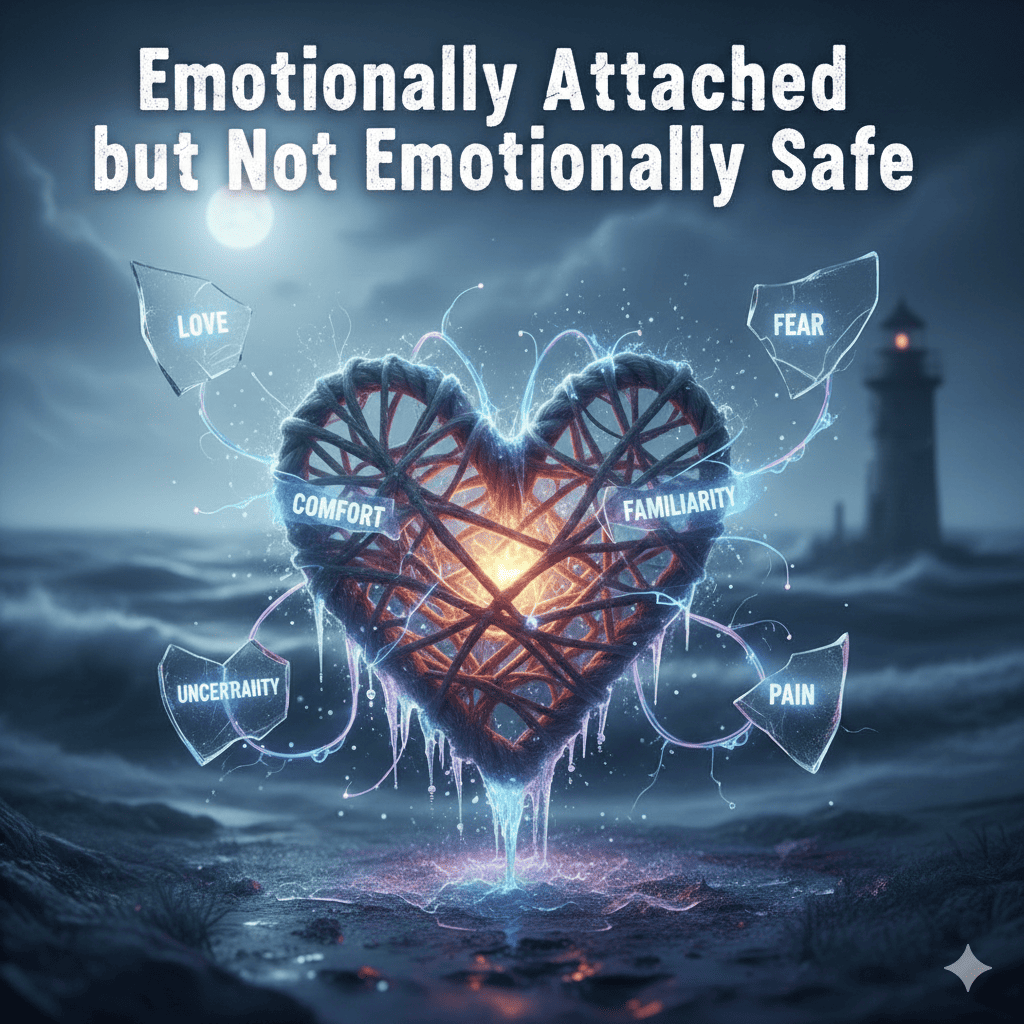
Feeling emotionally attached to someone can be powerful, comforting, and deeply meaningful. However, being emotionally attached alone does not always guarantee emotional safety. Many people stay in relationships that feel intense or significant while simultaneously experiencing anxiety, feeling unheard, or remaining emotionally unsettled.
Understanding the difference between being emotionally attached and feeling emotionally safe is essential for relationship clarity. This article explores how emotional attachment forms, why emotional safety matters, and the signs that indicate when a relationship may feel emotionally binding without being emotionally supportive.
Table of Contents
ToggleEmotional Attachment vs Emotional Safety
Emotional attachment refers to the bond formed through connection, familiarity, shared experiences, and emotional investment. It often develops naturally over time and can feel difficult to release.
Emotional safety, on the other hand, reflects how secure, respected, and understood you feel within the relationship. A relationship can be emotionally intense while still lacking emotional safety.
Attachment keeps people connected. Emotional safety allows people to be themselves without fear.
Why Emotional Attachment Can Feel Like Safety
Strong emotional attachment can create the illusion of safety because familiarity often feels reassuring. Over time, people may associate emotional closeness with security, even when their needs are not consistently met.
Several factors contribute to this confusion:
Fear of losing the relationship
Comfort in routine and familiarity
Emotional investment that feels irreversible
Hope that issues will improve over time
These factors can make emotional attachment feel protective, even when emotional well-being is compromised.
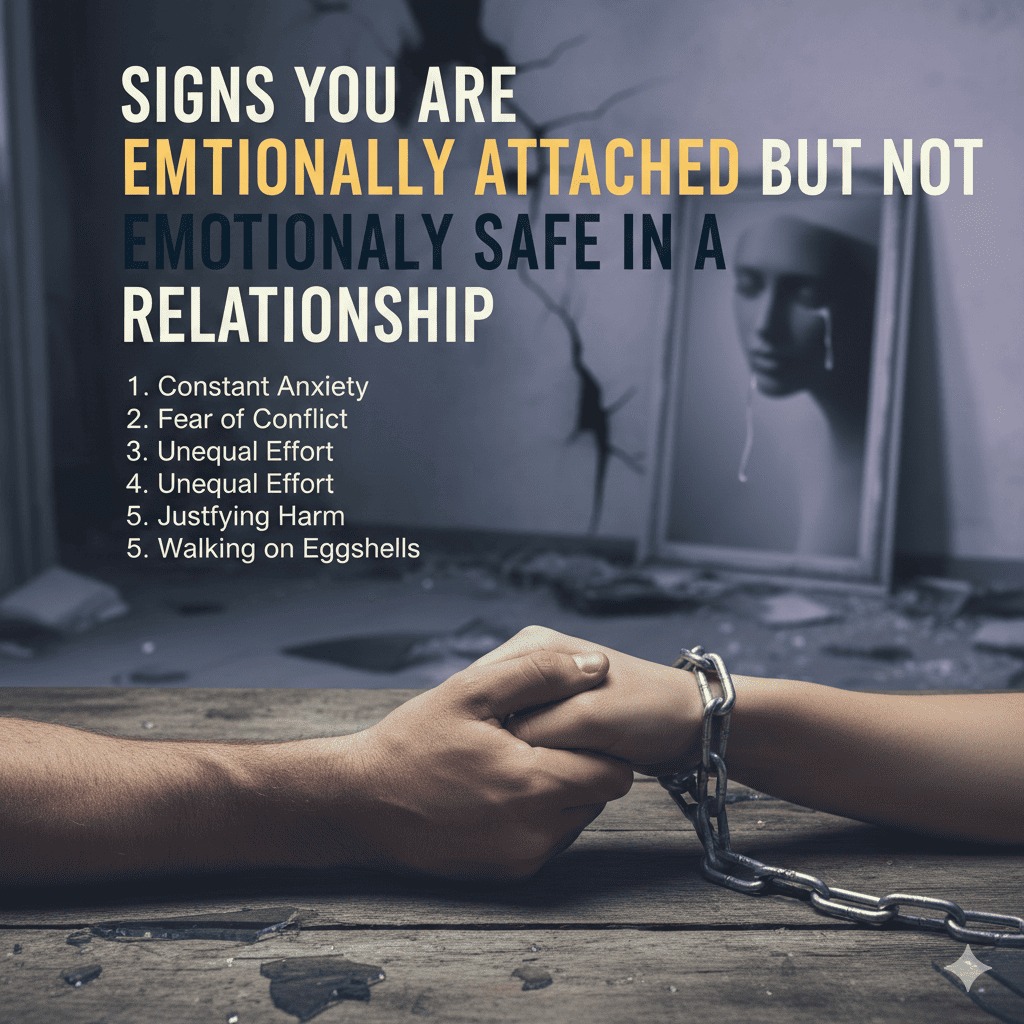
Signs You May Be Emotionally Attached but Not Emotionally Safe
Emotional safety is not measured by how much you care, but by how consistently supported you feel. The following signs often appear when attachment exists without emotional safety.
1. You Feel Anxious Expressing Your Needs
You hesitate to share concerns, boundaries, or emotions because you fear conflict, rejection, or emotional withdrawal. Communication feels risky rather than supportive.
2. Emotional Comfort Is Inconsistent
Moments of closeness are followed by emotional distance, confusion, or unpredictability. You may feel secure one day and unsettled the next.
3. You Minimize Your Own Discomfort
You frequently rationalize behavior that makes you uncomfortable, telling yourself it is not serious or that you are overreacting.
4. You Feel Responsible for the Relationship’s Stability
You often feel it is your responsibility to keep the peace, regulate emotions, or prevent conflict, even at the expense of your own well-being.
5. Boundaries Feel Difficult to Maintain
Setting limits leads to guilt, fear, or emotional tension. You may struggle to uphold boundaries consistently.
6. Emotional Intensity Replaces Emotional Security
Strong emotional highs and lows are mistaken for connection, even though calm, stable support feels missing.
7. You Stay Because Letting Go Feels Unbearable
The idea of leaving feels more distressing than staying, even when the relationship causes ongoing emotional strain.
Why Emotional Safety Matters More Than Attachment
Emotional safety supports healthy communication, trust, and mutual respect. Without it, even strong attachment can lead to emotional exhaustion and confusion.
Emotionally safe relationships allow individuals to:
Speak honestly without fear
Maintain personal boundaries
Feel respected during conflict
Trust consistency over intensity
When emotional safety is present, attachment strengthens rather than destabilizes the relationship.
Research on relationship dynamics shows that emotional support and constructive communication play a significant role in relationship satisfaction and psychological well-being. Studies published through the National Institutes of Health (NIH) highlight how consistent emotional responsiveness and supportive interaction patterns are linked to healthier, more stable relationships.
How Lack of Emotional Safety Affects Well-Being
Remaining in emotionally unsafe relationships can affect mental and emotional health over time. Common effects include:
Chronic anxiety or self-doubt
Emotional fatigue or burnout
Difficulty trusting future relationships
Loss of self-identity
Recognizing these effects early helps prevent long-term emotional harm.
Gaining Clarity Between Attachment and Safety
Clarity begins with awareness rather than immediate action. Asking reflective questions can help differentiate attachment from emotional safety.
Consider reflecting on:
Do I feel calm and supported most of the time
Are my emotions respected during disagreement
Can I express needs without fear
Is communication improving or repeating patterns
These reflections support informed decision-making rather than emotional reactivity.
For a broader understanding of how emotional patterns shape relationships, you may find it helpful to explore this guide on relationship clarity and emotional healing, which explains how awareness supports healthier decisions over time.
Can Emotional Safety Be Built Over Time?
In some cases, emotional safety can improve through honest communication, accountability, and consistent effort from both partners. However, improvement requires mutual willingness, not one-sided emotional labor.
Awareness alone does not change patterns unless it leads to healthier behavior over time.
When to Seek Support
If emotional attachment feels overwhelming or clarity remains difficult, seeking outside perspective can help. Counseling, therapy, or guided reflection provides neutral insight into emotional patterns and supports healthier coping strategies.
Seeking support reflects commitment to emotional health, not failure.
FAQs on Emotionally Attached
Is emotional attachment the same as love
No. Emotional attachment reflects bonding, while love in healthy relationships includes emotional safety, respect, and mutual support.
Can you be emotionally attached to someone who is not good for you
Yes. Attachment can persist even when a relationship causes emotional harm, especially when fear or familiarity is involved.
How do I know if my relationship lacks emotional safety
Signs include anxiety when communicating, difficulty maintaining boundaries, emotional unpredictability, and feeling consistently unheard.
Should emotional safety feel calm or intense
Emotional safety usually feels calm, consistent, and reassuring rather than emotionally volatile.
Can emotional safety exist without strong attachment
Yes. Some relationships develop safety before deep attachment forms, which can support healthier long-term bonding.
Recent Posts
- Morning Routine Ideas for Anxiety and Stress Relief
- Creative Ways Teens Are Using AI in School (2026 Guide for UK, Australia and Canada)
- Productive Things to Do When You Have No Motivation
- How to Stop Caring What People Think: A Real Guide
- AI and Teens: The Complete Parent and Teen Guide to Using AI Wisely in 2026