

School life is about more than just textbooks, assignments, and exams—it’s about creativity, problem-solving, and building the confidence to thrive in the real world. For today’s teens, artificial intelligence (AI) is becoming a powerful partner in this journey.
AI is no longer just something used by tech companies or scientists. It’s finding its way into classrooms, homework routines, and even after-school clubs.
This is happening in schools across the UK, Australia, Canada, Ireland, and Europe — not just in Silicon Valley classrooms. From organizing notes and brainstorming project ideas to writing novels or coding for hackathons, AI is giving students fresh ways to learn, create, and shine.
This blog will walk you through creative ways teens are already using AI in school life and how these tools can help them grow academically and personally. This post is part of our complete AI and teens guide — a full resource covering tools, safety, mental health, careers, and academic integrity for teens and parents in 2026.
Table of Contents
Toggle1. Smarter Note-Taking with AI
Keeping up with lectures, assignments, and project deadlines can be overwhelming. AI-powered note-taking apps help students summarize lessons, organize key points, and even create visual mind maps. Instead of rewriting long chapters, teens can focus on understanding concepts and revising quickly.
Example: An AI app can turn a history lecture into a concise bullet-point summary or generate quick flashcards for revision. This saves time and builds stronger memory retention.
2. AI as a Writing Partner
From essays to creative writing, AI tools are becoming writing buddies for teens. They can suggest better sentence structures, expand vocabulary, and even generate ideas for essays or short stories.
But here’s the key: AI shouldn’t replace personal creativity—it should enhance it. A teen writing a short story can use AI to brainstorm plot twists, but still add their personal voice and imagination.
If you want to explore how AI supports creative work beyond writing — including music, art, and video — our guide on AI and teen creativity goes deeper into that space.
Example: Students working on English assignments can use AI to draft multiple versions of an introduction and then choose the one that feels most authentic.
3. Project Research Made Easier
School projects often require hours of research across different sources. AI-powered search assistants can simplify this by scanning articles, summarizing important insights, and presenting them in an easy-to-read way.
Instead of drowning in endless tabs, teens can spend more time building arguments, designing presentations, or adding creativity to their projects.
4. Creative Writing and Novels with AI
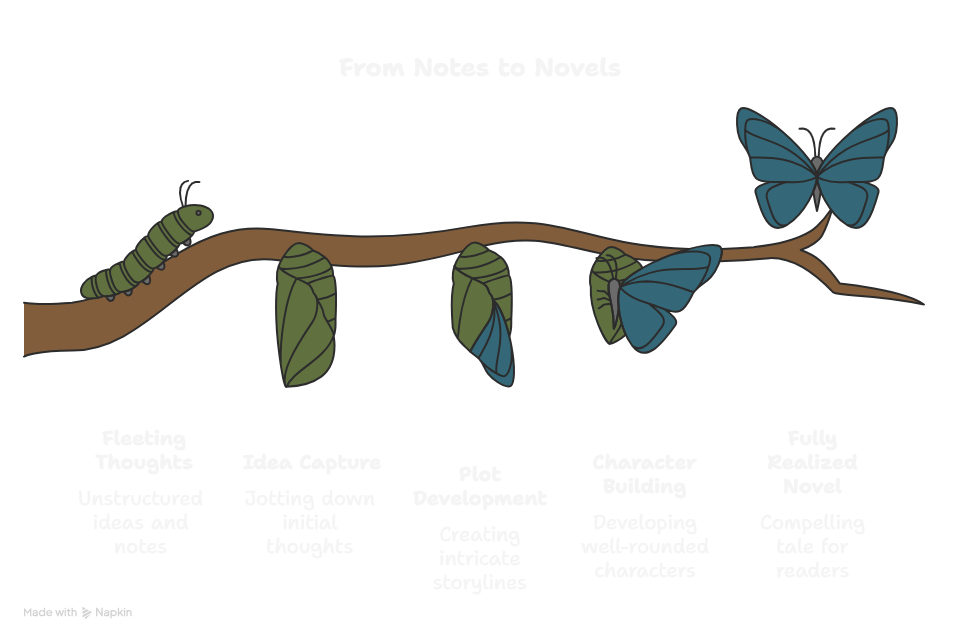
Here’s where the title “From Notes to Novels” really comes alive. Teens who love writing stories or dream of becoming authors can use AI tools to brainstorm characters, create dialogue ideas, or outline entire plots.
AI can act as a co-creator—helping a teen expand their short story into a full chapter or even turn random ideas into structured storytelling. It’s like having a creative partner who never runs out of energy.
5. AI for Languages and Communication
Learning a new language can feel intimidating, but AI makes it fun and interactive. Translation tools, pronunciation apps, and grammar assistants give teens instant feedback. This builds confidence in speaking and writing foreign languages, helping them connect better in a global world.
Example: A student learning French can practice with an AI chatbot that replies in French, improving fluency without the pressure of being judged.
How Teens Are Using AI Across Different School Systems
AI tools are being adopted in classrooms far beyond any single country or curriculum. Here’s how students in different parts of the world are putting these tools to use:
UK and Ireland: Students preparing for GCSEs, A-Levels, and the Irish Leaving Certificate are using AI to break down mark schemes, generate practice essay structures, and summarise dense source material for history and English literature. The pressure of tiered exams makes efficient revision tools especially valuable.
Australia: With VCE, HSC, and ATAR assessments shaping university pathways, Australian students are using AI to manage the research load of extended investigation tasks and to get instant feedback on essay drafts before submission.
Canada: Across provincial curricula from Ontario to British Columbia, Canadian teens are using AI writing assistants to strengthen their second-language French or English writing, and AI tutoring tools to bridge gaps in STEM subjects.
Germany, Belgium, and France: Multilingual students across Europe are using AI translation and language practice tools to move between German, French, Dutch and English with greater confidence — both for school assignments and for building skills in an increasingly international job market.
Finland: Finnish schools are internationally recognised for emphasising critical thinking over rote learning. Finnish teens are using AI as a research partner rather than an answer machine — asking it to challenge their arguments and identify gaps in their reasoning rather than simply produce answers.
What all of these students have in common is that they’re using AI not to avoid thinking, but to think more effectively within the systems they’re being assessed by.
6. Science and Math Made Simpler
Equations, formulas, and complex theories often frustrate students. AI-powered tutoring apps can break down problems step by step, turning difficult concepts into digestible lessons.
Instead of just showing the answer, these tools explain why a formula works. This nurtures logical thinking and helps students build stronger problem-solving skills.
7. AI in Art, Music, and Creativity
School isn’t only about academics. Creative teens are using AI for designing posters, composing music, editing videos, and even generating artwork for school events.
Imagine a student designing a cultural festival banner with AI-generated art or composing background music for a school play with AI music tools. These opportunities allow students to merge creativity with technology in inspiring ways.
8. Preparing for Hackathons and Competitions
Many schools encourage students to join innovation challenges, coding marathons, or debate contests. AI can act as a training partner—helping students brainstorm project ideas, analyze data, or simulate real-world scenarios.
Whether it’s building an app for sustainability or preparing a persuasive speech, AI tools boost confidence and efficiency. Teens not only prepare for competitions but also learn skills that matter in future careers.
For a broader look at where those skills can lead, our guide on AI-powered careers for teens covers which roles are emerging and how to position yourself now.
9. Personal Growth Beyond Academics
AI isn’t just for school tasks—it can also support emotional well-being. Journaling apps powered by AI help students reflect on their moods, while time-management assistants help them balance studies, hobbies, and rest.
This balance between academic success and personal growth creates well-rounded individuals who are prepared for the future.
Our guide on free mental health apps covers tools that support emotional balance alongside a busy school schedule — and if nighttime overthinking is draining your focus, how to stop overthinking at night has practical techniques that work even during exam season.
AI for Smarter Studying and Exam Prep
Not all studying is equally effective. AI tools can identify which topics need the most work, generate practice questions, and build personalised revision schedules. Instead of rereading entire chapters, teens can use AI to focus their energy where it counts most.
This kind of targeted revision is more efficient and less draining — which matters when you’re balancing multiple subjects and deadlines at once.
For a full breakdown of the best tools for this, see our guide on AI tools teens can use to study smarter.
For Parents: What Schools in the UK, Australia, Ireland and Europe Are Saying About AI
Education systems worldwide are updating their positions on AI. In the UK, Ofsted and individual schools are developing AI acceptable use policies. In Australia, state education departments have begun issuing guidance on responsible AI use in assessments. In Ireland, the Department of Education has acknowledged AI as a growing area for curriculum development.
Most schools in these countries are moving toward a position of guided AI use rather than outright bans — recognising that students who learn to use AI responsibly will be better prepared for university and the workplace.
If you’re a parent navigating these conversations at home, our complete AI and teens guide covers how to set boundaries, what questions to ask your child’s school, and how to support responsible AI habits from an early age.
FAQs
1. Is it okay for teens to use AI for school assignments?
Yes, as long as AI is used as a support tool, not a shortcut. Teachers value original thought, so teens should use AI for brainstorming, organizing, and enhancing—not copying answers. Most schools are actively developing AI policies right now — it’s worth knowing your school’s specific guidelines before submitting AI-assisted work.
2. Can AI improve creativity, or does it replace it?
AI boosts creativity by offering suggestions and ideas. However, the true creative spark always comes from the student. AI is like a collaborator, not a replacement.
3. How can teens balance AI with traditional learning?
Teens should combine both. Use AI for efficiency—summaries, ideas, or practice quizzes—but rely on self-study and critical thinking for deep understanding.
4. Are there risks in using AI for schoolwork?
The main risks are over-reliance and misuse. Students need to be mindful of plagiarism and make sure they’re learning, not just outsourcing tasks to AI. Our deeper guide on AI and teen responsibility covers exactly where the line sits on academic integrity and how to stay on the right side of it.
5. What are some beginner-friendly AI tools for students?
Note-taking apps (like Notion AI or Evernote with AI features)
Writing assistants (like Grammarly or Quillbot)
Language chatbots (like Duolingo or ChatGPT practice mode)
Math/Science helpers (like Photomath or Wolfram Alpha)
These tools are freely available to students worldwide — including those studying in the UK, Australia, Canada, Ireland, and across Europe — and most offer free tiers suitable for school use.
Final Thoughts
The future belongs to teens who know how to use AI not just as a tool, but as a partner in learning, creativity, and problem-solving. From taking smarter notes to writing full novels, AI is giving students opportunities that were once unimaginable.
But it’s not about depending on technology—it’s about growing with it. When used responsibly, AI helps teens sharpen their skills, boost confidence, and think bigger.
The goal isn’t just to use AI — it’s to grow alongside it. Teens who combine their own creativity, critical thinking, and emotional intelligence with AI tools will be the ones who stand out — not just in school, but in everything that comes after. Used responsibly, AI doesn’t make you less capable. It shows you how much further your own thinking can go.