
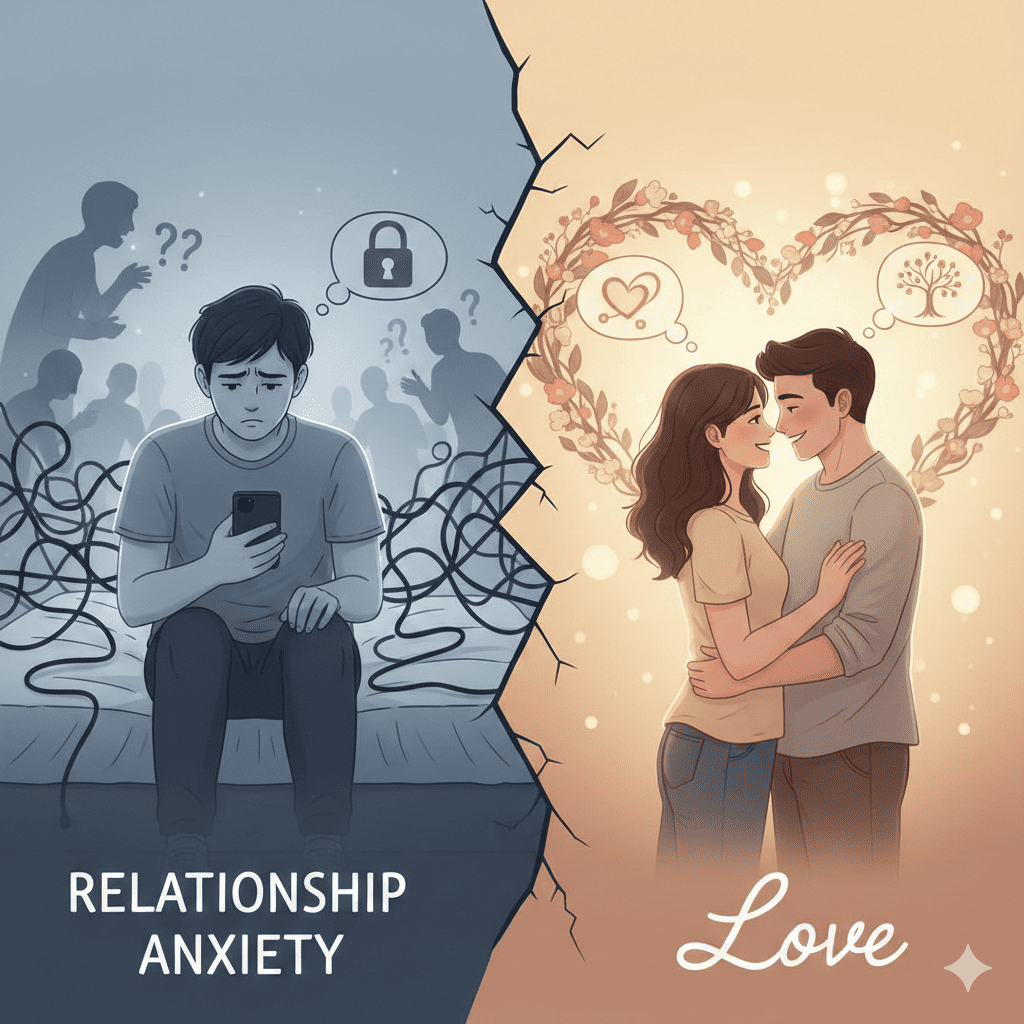
Relationship anxiety and love can feel surprisingly similar at times. Both can involve strong emotions deep attachment and intense focus on a partner. However while love supports emotional safety and growth relationship anxiety often creates stress fear and constant emotional tension.
Understanding the difference between relationship anxiety vs love helps bring clarity to emotional experiences and supports healthier relationship choices without blame or self judgment.
Why Relationship Anxiety Is Often Confused With Love
Relationship anxiety often develops from fear of loss uncertainty or emotional insecurity rather than from the relationship itself. These feelings can be mistaken for love because they involve strong emotional attachment and concern for the relationship.
When anxiety is present emotional reactions may feel urgent intense or overwhelming. This intensity can create the illusion of deep connection even when emotional wellbeing is being compromised.
How Love Typically Feels Emotionally
Love generally supports emotional safety consistency and balance. While no relationship is free from challenges love allows space for calm communication trust and emotional support.
In loving relationships:
• Emotional connection feels steady rather than urgent
• Communication feels possible even during conflict
• Emotional needs can be expressed without fear
• Time apart does not trigger panic or insecurity
Love encourages emotional growth rather than emotional strain.
🌙 Your Moon Sign Explains a Lot About This
Everything above lives in your emotional world, and your Moon Sign is the closest thing astrology has to a map of exactly that: what genuinely soothes you, what sets you off, and what you actually need to feel secure. It takes two minutes to find yours.
Find My Moon Sign →How Relationship Anxiety Feels Different
Relationship anxiety often creates ongoing emotional tension. Thoughts may loop around fear of abandonment rejection or losing the relationship. Emotional reactions may feel disproportionate to situations.
Common signs of relationship anxiety include:
• Constant worry about the relationship
• Fear of saying or doing the wrong thing
• Needing frequent reassurance
• Overanalyzing messages tone or behavior
These emotional patterns can be exhausting and may resemble emotionally draining relationship symptoms over time.
Emotional Intensity Does Not Always Mean Love
Strong emotional intensity is often mistaken for love. High emotional highs and lows conflict cycles or fear based attachment can feel meaningful even when they cause stress.
This confusion makes it difficult to separate genuine emotional connection from anxiety driven attachment. Emotional behavior patterns in relationships help reveal whether emotions support wellbeing or create ongoing distress.
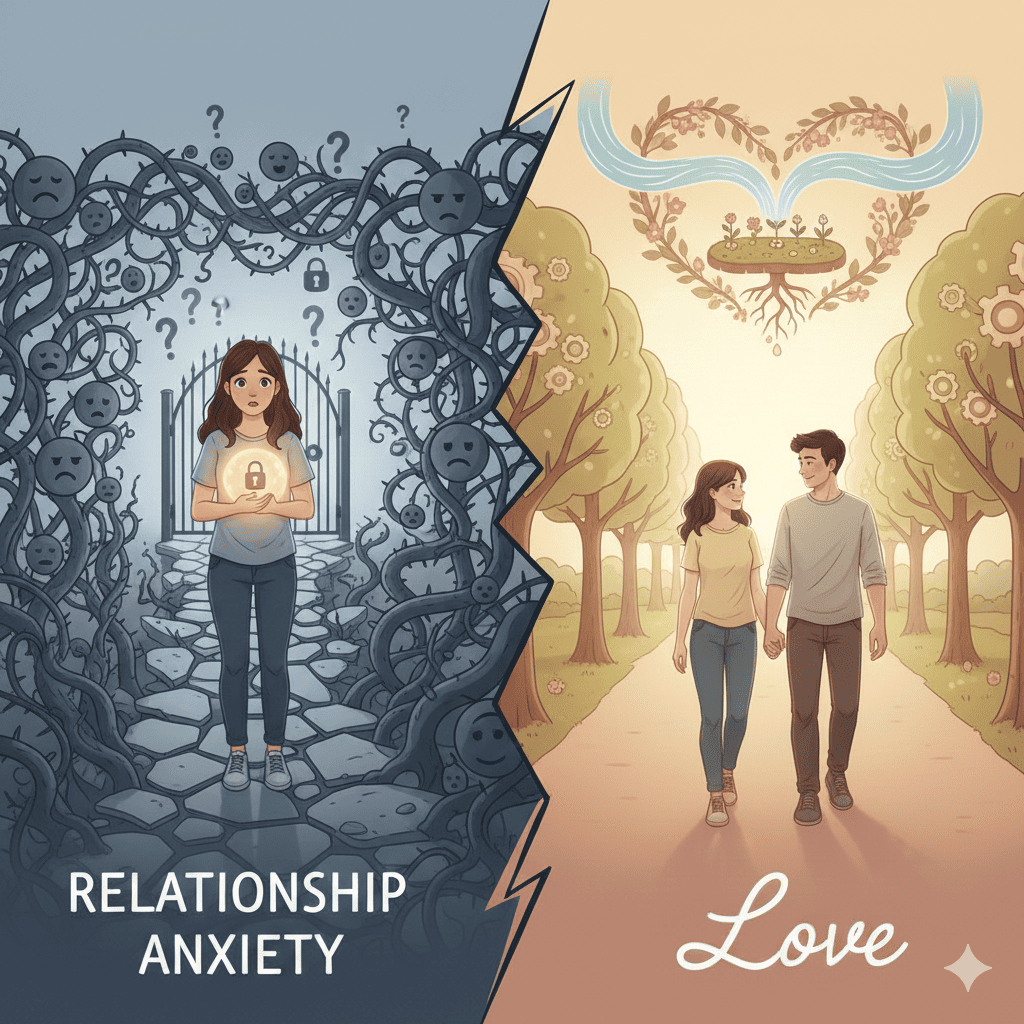
How Anxiety Impacts Emotional Wellbeing
Relationship anxiety can gradually reduce emotional confidence and clarity. Over time it may lead to self doubt emotional exhaustion and a loss of emotional balance.
Some signs your partner drains your emotional energy may overlap with anxiety responses especially when reassurance seeking and fear dominate emotional interactions.
Understanding these patterns supports awareness rather than self blame.
Relationship Anxiety vs Love: Key Differences
| Love | Relationship Anxiety |
|---|---|
| Emotional safety and trust | Fear of loss and uncertainty |
| Calm connection | Emotional urgency |
| Communication feels possible | Communication feels stressful |
| Independence feels secure | Time apart triggers worry |
| Emotional support feels balanced | Emotional energy feels drained |
This comparison helps clarify whether emotions support emotional wellbeing or signal anxiety driven attachment.
More on Relationships & Emotional Healing
If this resonated, these guides go deeper into the patterns, signs, and steps forward.
Why Relationship Anxiety Is Not a Personal Failure
Relationship anxiety is not a weakness or flaw. It often reflects attachment patterns emotional experiences or past relationships rather than current relationship quality alone.
Viewing anxiety without judgment helps reduce shame and creates space for emotional awareness and healthier relationship choices.
For deeper emotional clarity and awareness you may find this guide helpful: Relationship Clarity and Emotional Healing
When to Pause and Reflect
It may be helpful to pause and reflect when emotional reactions feel overwhelming persistent or disconnected from present experiences. Reflection helps identify whether emotions arise from love or from anxiety driven fear.
Pausing supports awareness not blame and helps restore emotional balance and clarity.
How Awareness Supports Healthier Relationships
Awareness helps distinguish emotional connection from emotional stress. Recognizing emotional patterns allows individuals to respond with clarity rather than fear.
If emotional interactions consistently feel draining or confusing this related guide may help: How to Know If Your Relationship is Draining You Emotionally
Conclusion
Relationship anxiety vs love can feel difficult to separate especially when emotions are strong. Love supports emotional safety balance and growth while relationship anxiety creates fear urgency and emotional strain.
Understanding the difference without blame encourages clarity emotional wellbeing and healthier relationship decisions over time.
FAQs on Relationship Anxiety vs Love
How can I tell if what I feel is love or anxiety?
Love feels steady supportive and safe while anxiety feels urgent fearful and emotionally exhausting over time.
Can love and anxiety exist together?
Yes love and anxiety can coexist especially when attachment patterns or past experiences influence emotional responses.
Does relationship anxiety mean the relationship is unhealthy?
Not always. Anxiety often reflects internal emotional patterns rather than the relationship itself.
Can relationship anxiety improve?
Yes awareness emotional support and healthier communication can reduce anxiety and improve emotional balance.